Use this as a working guide, not a passive read. Skim the sections, copy the frameworks, then connect the advice to a real role, interview, call, or account you are working on this week.
Start with a free resourceDownload the mutual action planNo signup required. Browse the free resource library
Put this guide to work
The Discovery Playbook
$19 USD · One-time purchase · Downloadable PDF
Preview this playbook“We do not have budget” is incomplete information. It might mean funding has not been requested, the current contact cannot discuss it, the work is not a priority, or there is a genuine spending constraint. Your next question should clarify which situation you are in, not force the buyer into a qualification checkbox.
The conversation below is an original fictional exercise. Use it to practice judgment, not as a script that every buyer should follow. Salesforce's customer-centric discovery training centers discovery on understanding customer needs. The decision branches here are our own practice framework.
Start with what the buyer means
Try: “When you say there is no budget, is this a project that has not been evaluated for funding, or is new spending currently off the table?” This gives the buyer room to describe the constraint. Avoid suggesting that they simply need to find more money.
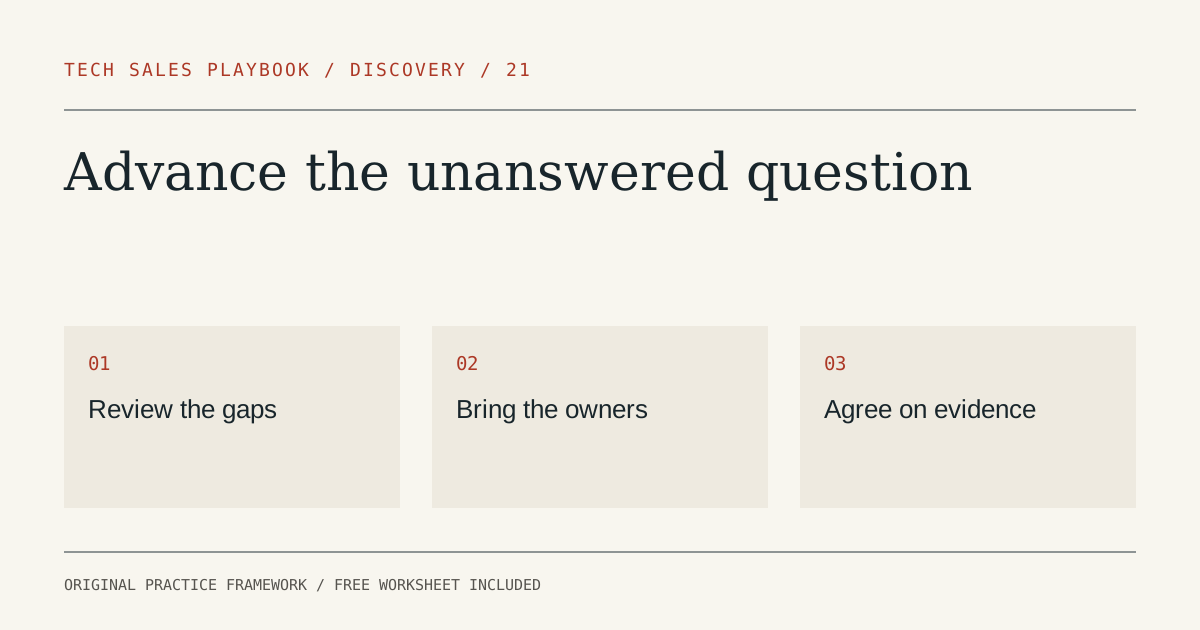
If spending is frozen, ask whether a future conversation is useful and what event would make it relevant. If they say the issue is not important, accept that rather than inventing urgency. If they are exploring a problem but have not requested funding, investigate the workflow before talking about a business case.
Find a concrete problem before calculating value
- “Can you walk me through the last time this happened?”
- “Who had to do extra work, and what did they do?”
- “How do you measure that work today?”
- “What have you already tried, including leaving the process as it is?”
- “What would need to change for this to become a priority?”
Ask follow-ups based on the answer. Do not run through every question mechanically. A buyer who cannot identify a meaningful consequence may not need a project. A buyer who has a specific operational issue may need another stakeholder to validate its size.
Practice an honest impact calculation
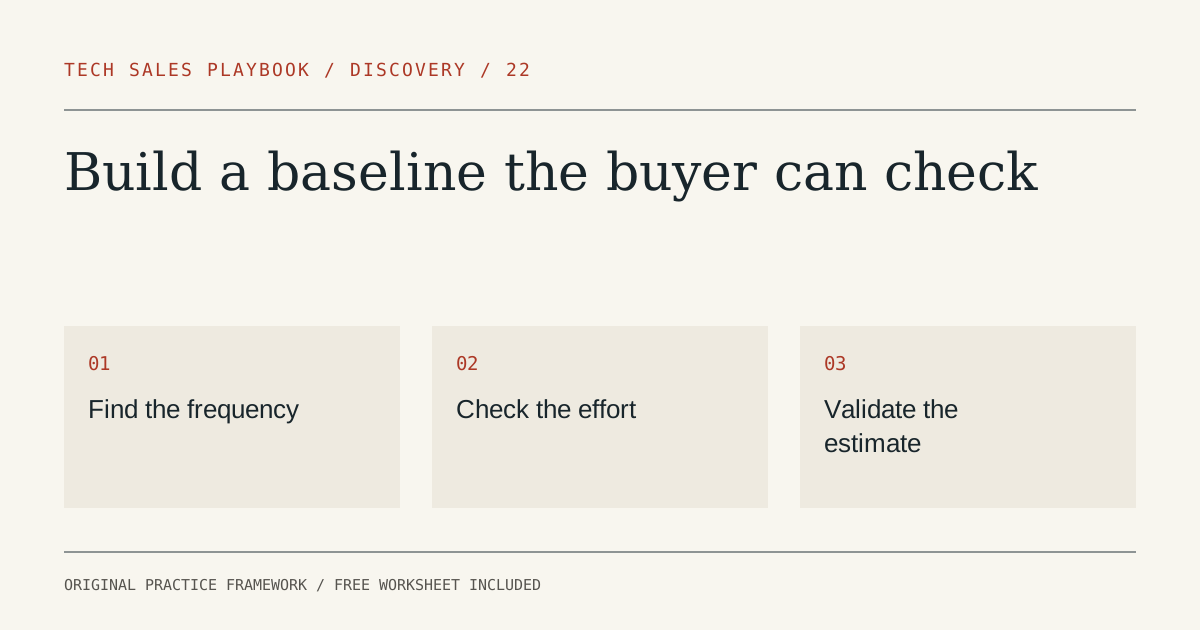
Suppose a fictional operations lead says four people each spend two hours per week reconciling reports. That describes eight staff-hours of effort weekly. It does not establish eight hours of recoverable savings: some reconciliation might remain, adoption takes work, and reduced effort does not automatically reduce payroll.
Confirm the source of the estimate, how often the task occurs, and which parts a proposed change could affect. Write the calculation as an assumption to validate. Keep implementation effort and other costs visible. If the buyer has no trustworthy baseline, agree how to collect one instead of presenting a confident return-on-investment claim.
Ask about the funding decision
Once the problem is clear, ask how comparable purchases are approved. “Who would need to validate this problem before anyone requests funding?” often opens a more useful discussion than demanding the name of an economic buyer.
Then clarify the information those people need, the competing priorities, and any real planning window. A meeting with a budget owner is not evidence that funds are approved. Record who confirmed each fact and what is still an assumption.
A short sample conversation
Buyer: “There is no budget for another reporting tool.”
Seller: “Understood. Is reporting improvement already being considered, or are you mostly exploring what is available?”
Buyer: “Exploring. The regional managers complain about manual work, but we have not measured it.”
Seller: “Would it be useful to understand one region's process first, or is that not a priority right now?”
Buyer: “One region would be useful. I can bring the operations manager.”
Seller: “Then we could map the current steps and decide whether any further evaluation is justified. What would the manager want us to prepare?”
Notice that the next step is a validation conversation, not a promised purchase. If the buyer had declined, a respectful close would have been a legitimate result.
Choose advance, nurture, or disqualify
Advance when there is a relevant problem and agreement on a useful validation step. Nurture when timing is the obstacle and the buyer has agreed to a specific future trigger. Disqualify when there is no fit, no meaningful need, or no willingness to continue. Do not fill the pipeline with speculative dates to compensate for missing evidence.
Use the discovery call scorecard to review listening and next-step quality. For a structured self-study sequence, see discovery call training for new AEs. The free exercise may be enough if you only need a better budget conversation today.
Put this guide to work
The Discovery Playbook
Understand the customer’s workflow, test impact, and clarify the next decision.
$19 USD · One-time purchase · Downloadable PDF
Preview this playbookRead the sample and see what is included before you buy.
Need the broader set? Compare The Deal Execution Bundle for $39. Includes this book.