Use this as a working guide, not a passive read. Skim the sections, copy the frameworks, then connect the advice to a real role, interview, call, or account you are working on this week.
Start with a free resourceDownload the mutual action planNo signup required. Browse the free resource library
Put this guide to work
The Enterprise Playbook
$19 USD · One-time purchase · Downloadable PDF
Preview this playbookA deal described as “with procurement” needs a more specific status. The buyer might be creating a vendor record, completing security review, comparing commercial terms, waiting for funding, or reviewing a contract. These are different tasks with different owners. Offering a discount before identifying the task can reduce the price without moving the decision.
Use this checklist to organize a conversation with your buyer and internal team. It is a sales coordination exercise, not legal advice or a substitute for approved contracting procedures. The example is fictional.
Replace the stage label with an actual task
Ask: “Which remaining step is preventing approval, who owns it, and what do they need from us?” If your contact does not know, ask who can clarify the process. Avoid bypassing them or escalating to executives without context and an agreed reason.
- Vendor onboarding: Are supplier details and required forms complete?
- Security review: Which questionnaire, evidence, or exception is still open?
- Legal review: Which document version is being reviewed, and by whom?
- Commercial review: Is the unresolved issue price, scope, term, payment timing, or another condition?
- Funding approval: Has the budget owner approved this purchase and its actual scope?
- Signature: Who is authorized to sign, and what must be complete first?
Keep sensitive documents in your company's approved systems. A shared plan should track status and owners, not copy confidential contract language into an unrestricted spreadsheet.
Separate dependencies from dates
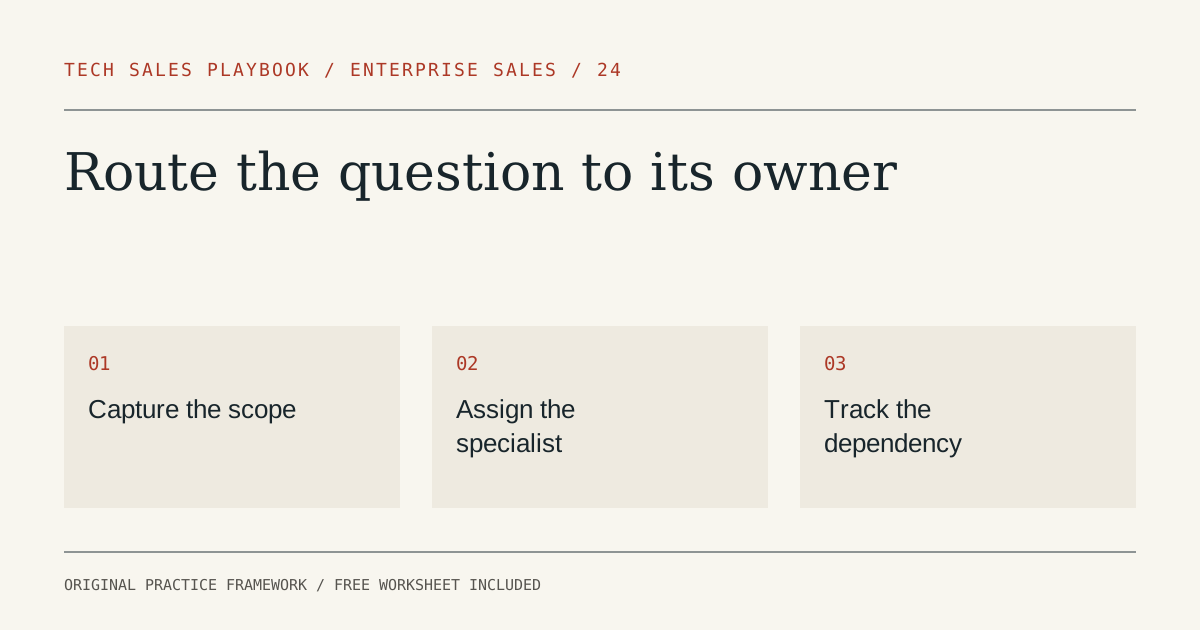
A target signature date is only useful when the preceding work can realistically finish. Download the procurement blocker worksheet and record each task, owner, dependency, requested evidence, agreed date, and status. Leave dates unconfirmed when the owner has not agreed to them.
For a fictional analytics purchase, procurement is waiting for security approval. Security is waiting for an architecture response from the vendor. The useful next action is to assign the appropriate technical owner to that response, then ask the buyer about the review sequence. A price concession does not answer the architecture question.
Use the mutual action plan guide if several workstreams need coordination. An action plan becomes mutual when the buyer helps shape it and agrees to their responsibilities; emailing your own close checklist is not enough.
Check whether price is actually the blocker
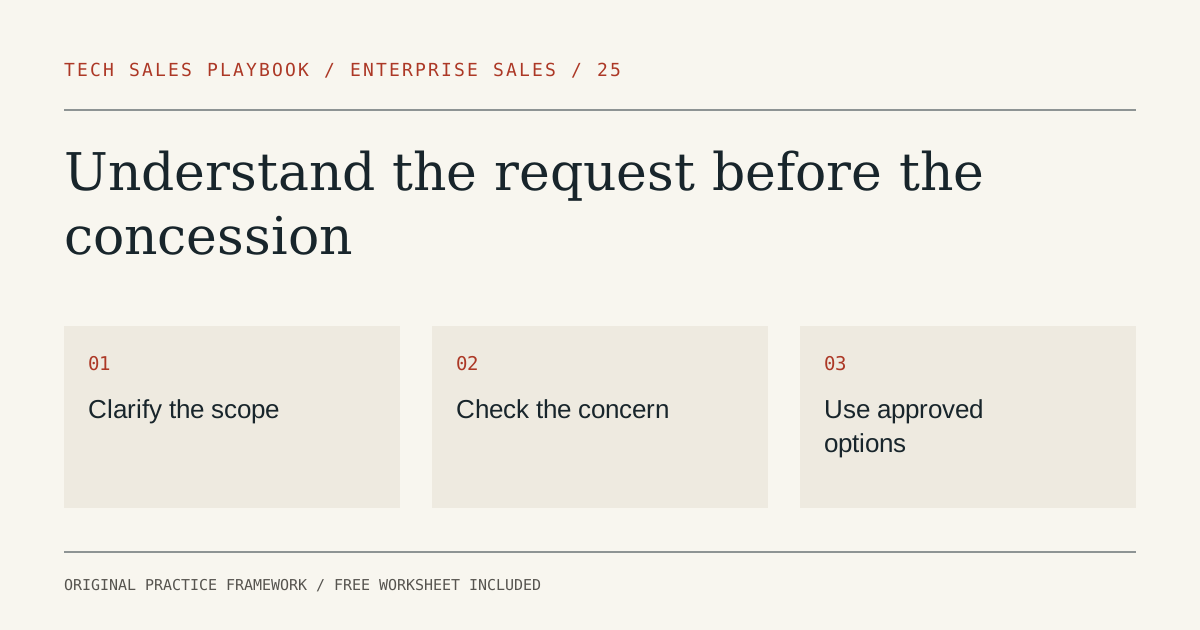
If procurement requests a discount, clarify the comparison and the complete proposal. Are they comparing the same scope and term? Has implementation or another required cost been omitted? Does a smaller initial scope better match the need? Bring finance and your manager into options that require approval.
Salesforce Trailhead's deal-structure lesson describes considering concessions as a whole and involving support teams early. Use that principle to prepare approved options. Do not promise a concession or contract term outside your authority.
Send a useful follow-up
Here is an original example to adapt: “My understanding is that the architecture response is the open item before security can complete its review. Our technical lead will provide the response through the agreed channel. Could you confirm who reviews it and the expected review window? Once that is clear, we can update the remaining approval steps together.”
This message identifies the dependency and asks for missing information. It does not create a false deadline or suggest the customer is at fault. If you do not know when your team can respond, confirm internally before promising a date.
Update the forecast with evidence
Record what is complete, what remains, and which dates the responsible people have confirmed. If a key dependency has no owner or timeframe, explain that uncertainty to your manager. Do not label a deal committed just because the buyer likes the product or your quarter is ending.
Review the plan after a meaningful change: a review is completed, a new issue is raised, or a stakeholder changes. Repeated “any update?” emails without new information can create noise for everyone.
Choose deeper support only if needed
The worksheet is free and can be sufficient for one stalled opportunity. If you need a broader framework for stakeholder alignment, evaluation, and handoff, compare the SaaS procurement sales playbook path. It points to the existing Enterprise Playbook and its public preview. It is a self-study PDF, not outsourced procurement management or legal review.
Put this guide to work
The Enterprise Playbook
Plan complex accounts, align stakeholders, and guide evaluation through rollout.
$19 USD · One-time purchase · Downloadable PDF
Preview this playbookRead the sample and see what is included before you buy.
Need the broader set? Compare The Deal Execution Bundle for $39. Includes this book.