Use this as a working guide, not a passive read. Skim the sections, copy the frameworks, then connect the advice to a real role, interview, call, or account you are working on this week.
Start with a free resourceDownload this guide's free practice worksheetNo signup required.
Put this guide to work
The Enterprise Playbook
$19 USD · One-time purchase · Downloadable PDF
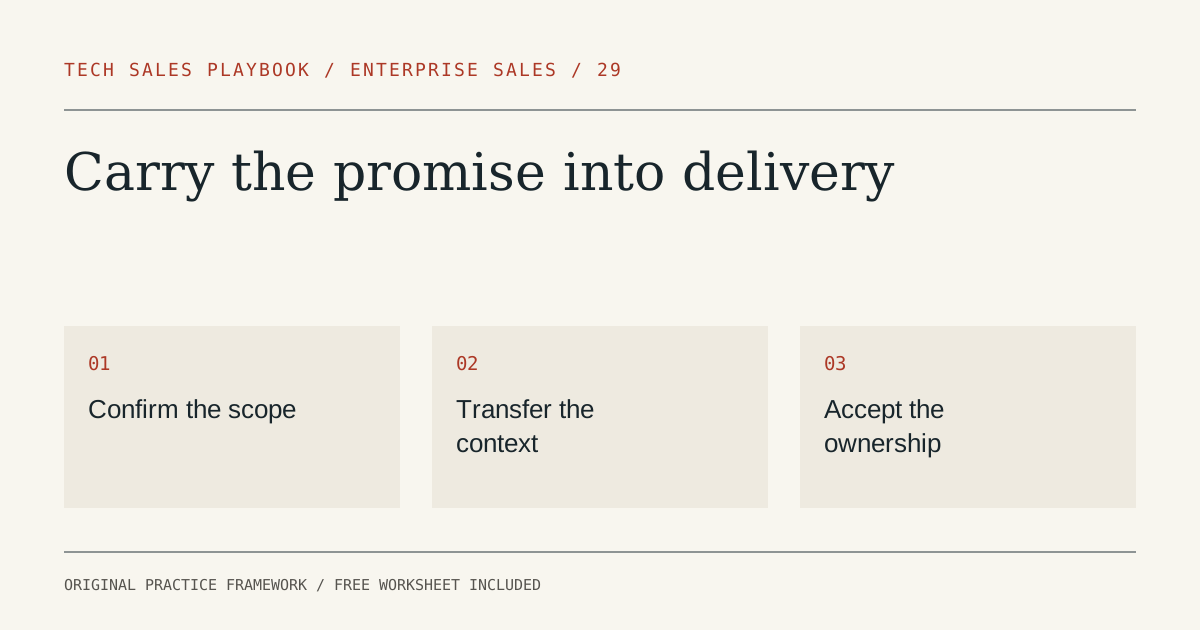
Preview this playbookA sales-to-customer-success handoff should preserve the customer's agreed objectives, purchased scope, and open questions. The receiving team needs to know what was promised and which assumptions still require validation. A closed-won status does not answer those questions by itself.
HubSpot Academy covers sales-to-customer-success handoffs. The template below is an original cross-team preparation exercise.
Separate scope from aspiration
Record what the customer purchased and what they hope to achieve in different fields. A desired outcome is not automatically a contractual commitment. Link approved internal records so the receiving team can verify the terms rather than relying on a rep's memory.
| Handoff item | What to capture |
|---|---|
| Objective | The customer's stated reason for buying |
| Scope | Purchased product, services, and boundaries |
| Promises | Accepted commitments and their owners |
| Stakeholders | Sponsor, operational owner, and implementation contacts |
| Risks | Unresolved dependencies and known limitations |
| First decision | What the kickoff or next meeting should establish |
An original fictional handoff
The customer bought access to a routing product and plans to improve support handoffs. The sales conversation discussed a possible integration, but it was not included in the purchased implementation scope. The handoff must make that distinction visible so the customer-success team does not unknowingly confirm an unapproved commitment.
If sales created an expectation that conflicts with scope, escalate and resolve it with the appropriate owners. Do not bury it in a note and hope the receiving team discovers it later.
Confirm that the transfer happened
Assign a receiving owner and hold the review required by your process. Ask whether the notes are sufficient to prepare the first customer conversation. Sending a document is a handoff attempt; acceptance and clarification establish whether context was actually transferred.
Keep the customer-facing introduction concise and accurate. Explain who will lead the next stage and what that conversation is for. Avoid making the customer repeat information simply because internal ownership changed.
Review the first delivery conversation
After the kickoff, compare new questions with the handoff. Which information was missing? Which promise needed clarification? Use that feedback to improve the next transfer.
For practice, give a colleague a fictional closed-won summary containing one ambiguous promise. Ask them to plan the kickoff. If they cannot identify scope and owner without guessing, revise the handoff before treating the deal as operationally complete.
Use the free worksheet
Download the sales-to-customer-success handoff worksheet. It opens in a spreadsheet and requires no signup. Use fictional details for practice and your approved systems for real customer or employer information.
Choose your next step
Sales-to-Customer-Success Handoff Practice for Enterprise Teams explains the free exercise, the relevant paid resource, and who it fits. Read the product preview before deciding whether you need the broader self-study manual.
Continue with SaaS Renewal Discovery Questions Before an Expansion Pitch.
Put this guide to work
The Enterprise Playbook
Plan complex accounts, align stakeholders, and guide evaluation through rollout.
$19 USD · One-time purchase · Downloadable PDF
Preview this playbookRead the sample and see what is included before you buy.
Need the broader set? Compare The Deal Execution Bundle for $39. Includes this book.