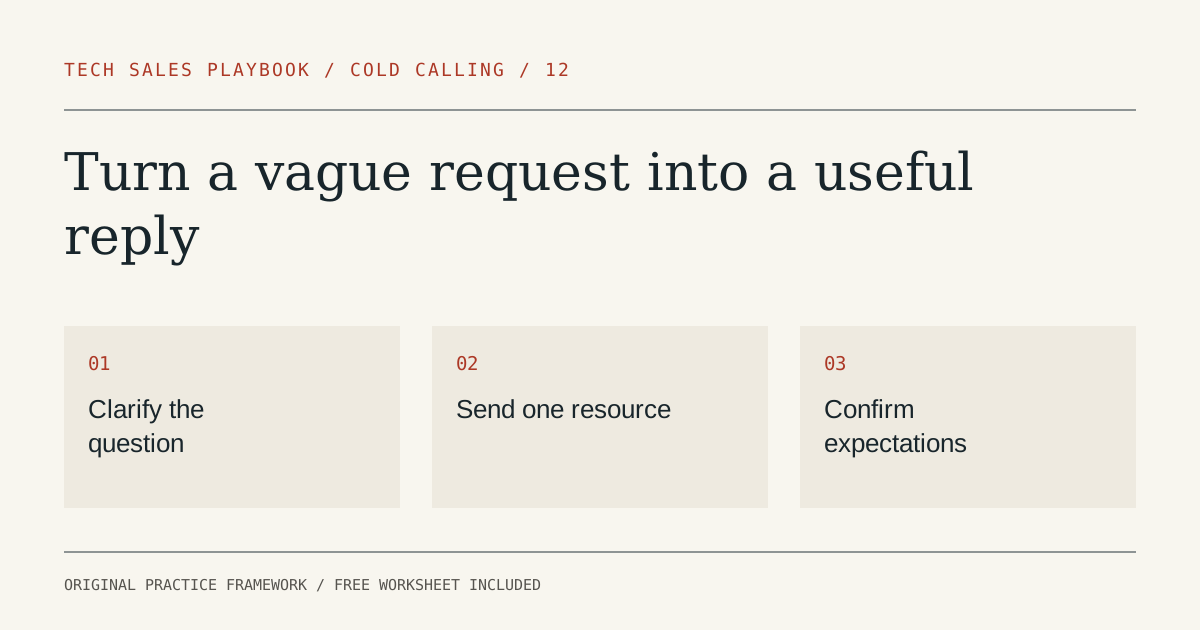
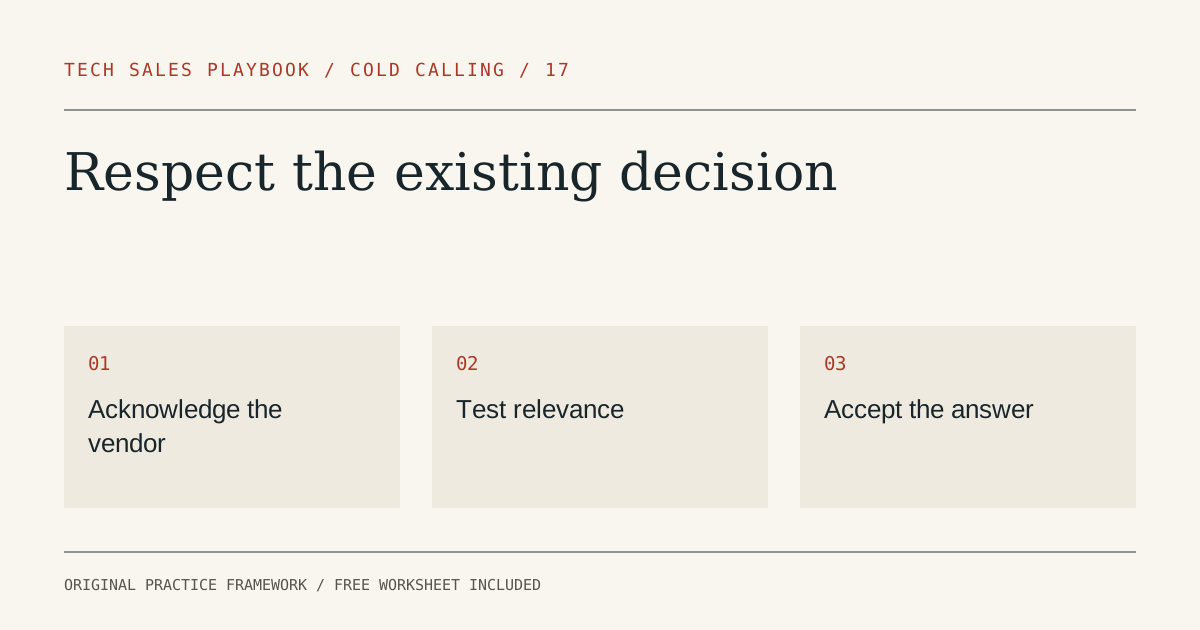
Use this as a working guide, not a passive read. Skim the sections, copy the frameworks, then connect the advice to a real role, interview, call, or account you are working on this week.
Start with a free resourceDownload the call-practice scorecardNo signup required. Browse the free resource library
Put this guide to work
The Cold Calling + Mock Call Playbook
$29 USD · One-time purchase · Downloadable PDF
Preview this playbookUse this five-day plan to practice one part of a cold call at a time. It is a suggested exercise schedule, not a promise of meetings or a hiring outcome. Each session can take twenty minutes: five to prepare, ten to practice, and five to review.
Download the free cold-call practice scorecard CSV. The scorecard separates observed behavior from a single overall impression. Practice with a willing partner; obtain permission before recording anyone.
Day one: identify yourself and explain the call
Choose a fictional company and one buyer role. Write an opening that identifies you, your company, and why you are calling. Avoid pretending to have spoken before, implying a referral you do not have, or disguising a sales conversation.
For example: “Hi Jordan, this is Alex with Example Software. We help service teams keep customer handoffs organized. I’m calling to understand whether handoff follow-up is something your team is working on.” This is a practice example; replace every claim with something true about the product you represent.
Say the opening aloud three times. Ask your partner what they understood. If they cannot explain the reason for the call, simplify it before adding more words.
Day two: test relevance with one question
Write a buyer-specific hypothesis, then label it as a hypothesis. “Growing service teams may lose context at handoff” is different from claiming that a particular company has that problem.
Practice a neutral question such as “How does that handoff work today?” Let the partner answer. Summarize what they said before asking another question. Score whether your follow-up uses their answer rather than jumping back to the script.
Day three: respond to an objection
Have your partner choose between “We already use something,” “This is not a priority,” and “Please stop calling.” Practice recognizing that these require different responses.
For an existing solution, you might ask whether the current workflow meets their needs, if they are willing to continue. For low priority, acknowledge timing rather than manufacturing urgency. For a stop request, end the outreach. A respectful ending is a valid practice result.
Day four: propose a specific next step
Only propose a meeting when the conversation gives it a purpose. Tie the proposed agenda to the buyer's stated issue. “Compare how the two teams handle handoff exceptions” is clearer than “Show you our platform.”
Practice three outcomes: the buyer accepts, asks for information, or declines. For information requests, clarify what would be useful and use the channel they approve. Do not score every non-meeting as a failed call.
Day five: run the whole conversation
Run two short simulations with different responses. Your partner should vary the answers so you cannot pass by reciting the same script. After the first attempt, choose one change and repeat the scenario.
Use a simple scale for each dimension: 0 means not demonstrated, 1 means partial, and 2 means clear. Score identification, relevance, listening, objection response, and next-step clarity. These are practice anchors, not a validated hiring assessment. Keep a sentence of evidence beside each score.
Review behavior rather than personality
“Asked a follow-up based on the buyer's answer” is useful feedback. “Be more confident” is too vague to rehearse. Identify the sentence, pause, or question you want to change, then practice that moment again.
Use the prospecting reading path for related guides. The Cold Calling + Mock Call Playbook adds annotated scenarios, objection guides, and more drills.
Put this guide to work
The Cold Calling + Mock Call Playbook
A complete cold-call and mock-call system for SDR candidates, BDRs, and reps who need booked meetings.
$29 USD · One-time purchase · Downloadable PDF
Preview this playbookRead the sample and see what is included before you buy.
Need the broader set? Compare The Prospecting Bundle for $39. Includes this book.