Use this as a working guide, not a passive read. Skim the sections, copy the frameworks, then connect the advice to a real role, interview, call, or account you are working on this week.
Start with a free resourceDownload this guide's free practice worksheetNo signup required.
Put this guide to work
The Cold Calling + Mock Call Playbook
$29 USD · One-time purchase · Downloadable PDF
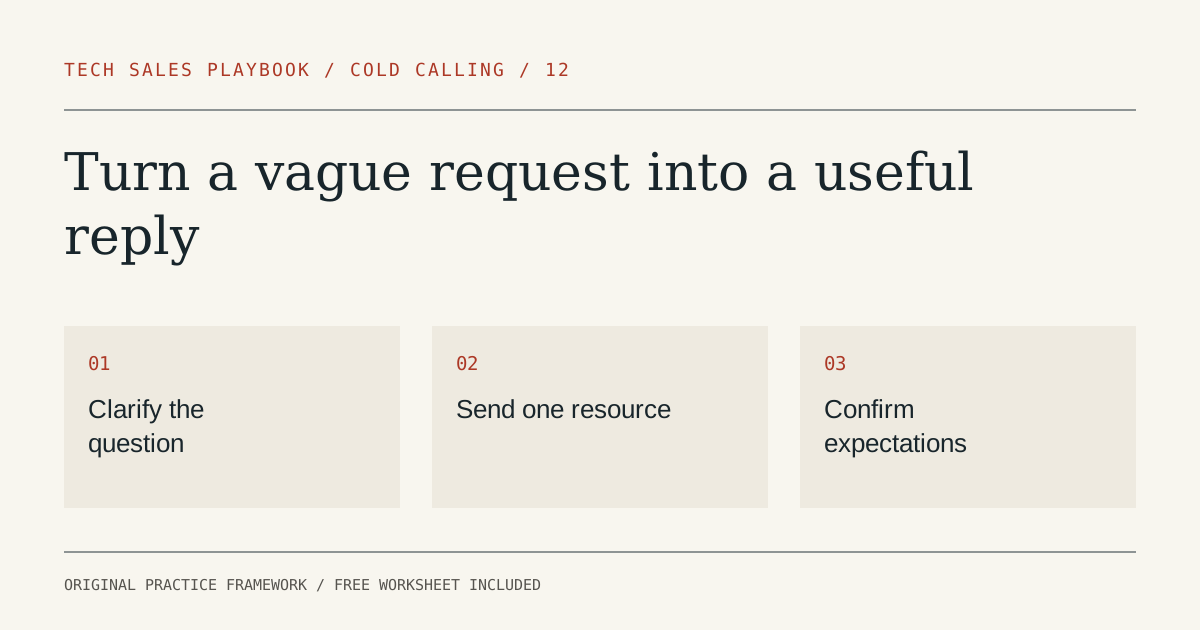
Preview this playbookWhen a prospect says “send me information,” acknowledge the request and ask one short question about what would be useful. Send material that answers that question. Do not treat the request as consent to a meeting or proof of a qualified opportunity.
HubSpot lists this among common prospecting objections. Intent varies by conversation, so the original response examples below focus on clarification rather than assuming every request is a brush-off.
Ask one question, not five
Try: “Happy to. Would an overview of the workflow or an example of how teams evaluate it be more useful?” Offer choices you can actually fulfill. If the person is ending the call, respect that instead of using the question to force a discovery interview.
If they identify a concern, repeat it briefly: “Understood—you want to see how ownership changes between shifts.” That gives you a concrete basis for the email and a way for the person to correct a misunderstanding.
Send the resource you promised
Original fictional email: “Morgan, here is the workflow overview we discussed. The section on shift changes shows how the next owner sees the latest action. It may help you compare that step with your current process. If it leaves the permissions question unanswered, tell me which role needs access and I can check with the right colleague.”
This message does not attach a stack of unrelated brochures or claim an untested integration. It connects the resource to the actual request and leaves room for a specific response.
| What you hear | Useful response |
|---|---|
| A specific product question | Send the approved answer or route it to an owner |
| A request for general context | Send a short overview with a clear description |
| A request to stop the call | End politely and honor the requested boundary |
| An explicit stop request | Stop outreach according to your process |
Clarify follow-up without a trap
If the conversation allows, ask whether they want you to check back after reading. An agreement to receive information is not automatically an agreement to recurring follow-up. Record the actual answer, including no agreed next step.
For practice, ask a partner to deliver the same phrase in three contexts: genuinely curious, rushed, and uninterested. Respond to the context rather than repeating a rebuttal. Review whether you listened, kept the promise small, and avoided inventing product claims. The useful outcome may be a clear stop as well as a continued conversation.
Use the free worksheet
Download the ‘send me information’ worksheet. It opens in a spreadsheet and requires no signup. Use fictional details for practice and your approved systems for real customer or employer information.
Choose your next step
Practice the ‘Send Me Information’ Moment on a Cold Call explains the free exercise, the relevant paid resource, and who it fits. Read the product preview before deciding whether you need the broader self-study manual.
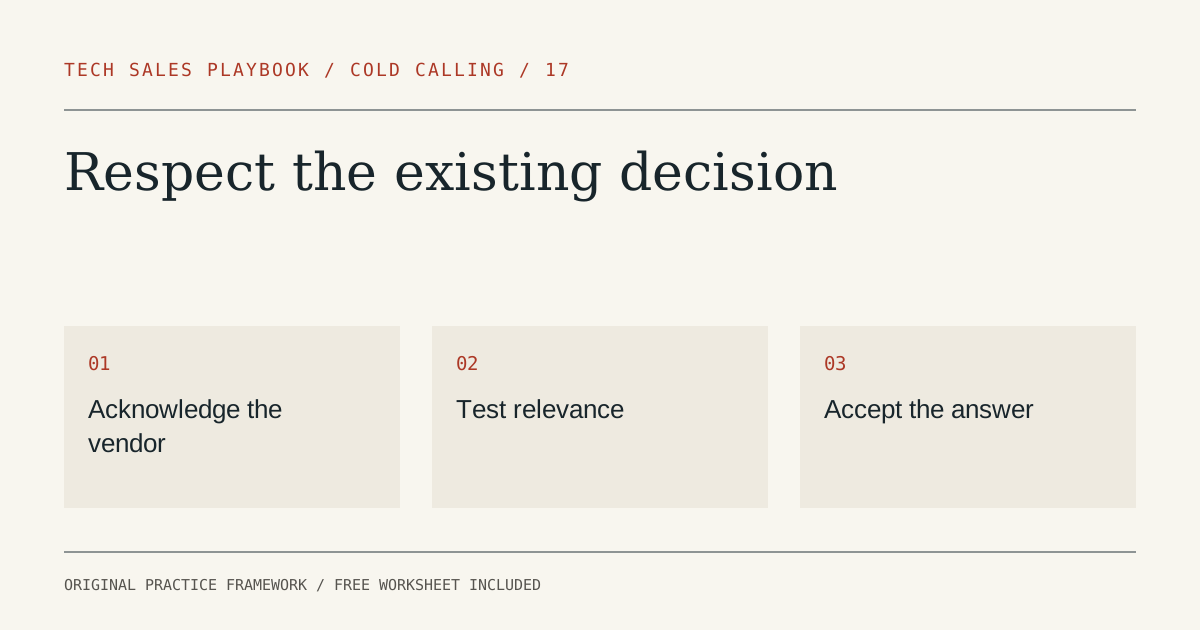
Continue with ‘We Already Have a Vendor’: Respond Without Attacking the Incumbent.
Put this guide to work
The Cold Calling + Mock Call Playbook
A complete cold-call and mock-call system for SDR candidates, BDRs, and reps who need booked meetings.
$29 USD · One-time purchase · Downloadable PDF
Preview this playbookRead the sample and see what is included before you buy.
Need the broader set? Compare The Prospecting Bundle for $39. Includes this book.