Use this as a working guide, not a passive read. Skim the sections, copy the frameworks, then connect the advice to a real role, interview, call, or account you are working on this week.
Start with a free resourceDownload the call-practice scorecardNo signup required. Browse the free resource library
Put this guide to work
The Cold Calling + Mock Call Playbook
$29 USD · One-time purchase · Downloadable PDF
Preview this playbookFintech buyers evaluate operational reliability, financial risk, customer experience, compliance, and engineering cost at the same time. A cold call should identify the evaluation problem, not compress all of that into a claim about lower fees or higher conversion.
Build the Call Around a Money-Movement Workflow
Choose one public business change: international expansion, a marketplace launch, subscription pricing, embedded finance, a new fraud role, or a finance-system migration. Map the likely workflow and write what you still do not know.
“I saw the company is expanding its marketplace into two new countries. Platforms at that stage often revisit seller onboarding, payouts, and reconciliation. Which part, if any, is creating work for your team?”
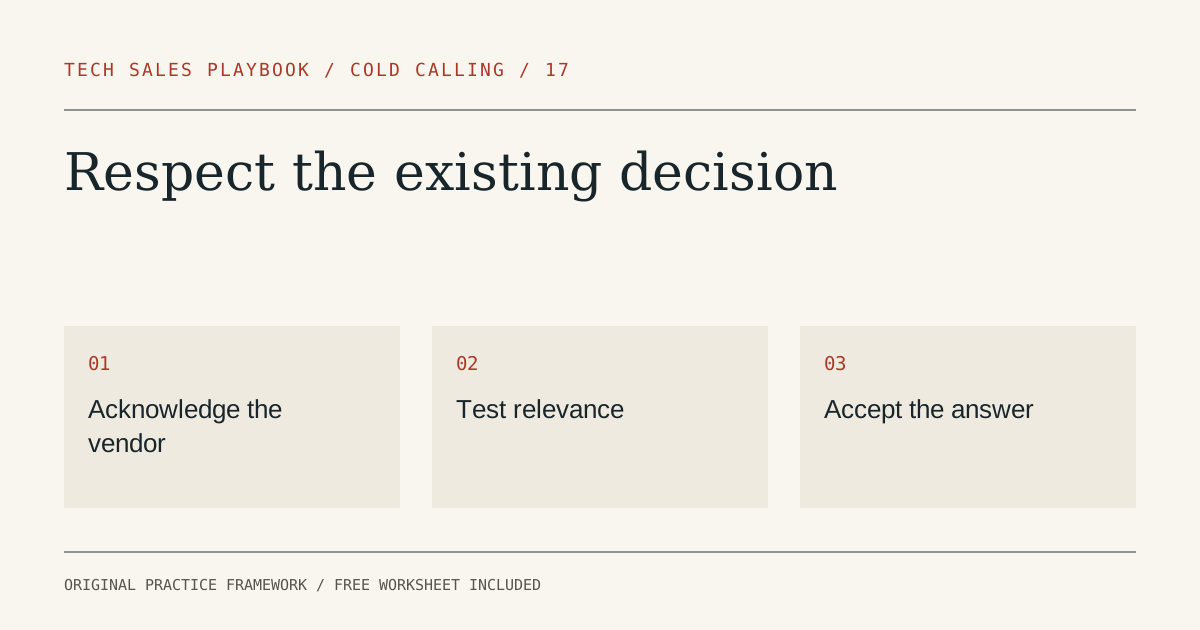
“Our Current Provider Works”
“That may be the right answer. When you evaluate ‘works,’ is the deciding factor reliability, geographic coverage, operating effort, economics, or something else?”
Do not lead with an unverified rate comparison. Learn the buyer's criteria and whether a review exists.
“Switching Is Too Risky”
Respect the concern:
“I understand. Is the largest risk migration effort, transaction continuity, reconciliation, customer impact, or internal approval?”
The next step might be a technical evaluation, a business-case discussion, or no action. Never promise a risk-free migration.
“Compliance Owns This”
“That makes sense. What does compliance need to see before a business or product team can evaluate the workflow?”
The Consumer Financial Protection Bureau compliance resources can help you understand why evidence and process matter. They do not establish which rules apply to a particular prospect or product.
“Your Fees Are Too High”
First confirm what is being compared: headline rate, total processing cost, fraud loss, failed-payment work, cross-border cost, or engineering overhead.
“Which cost is driving the concern, and what volume or workflow should a fair comparison include?”
Build a transparent comparison using the buyer's definitions. Do not invent savings.
“Send Pricing”
“I can send the public pricing information. To avoid a misleading comparison, what business model, markets, and transaction flow should the example reflect?”
Separate published pricing from negotiated terms and assumptions.
Use the SaaS mock cold-call guide for role-play structure, the MEDDIC discovery map for decision evidence, and the Stripe interview guide to practice payments-specific buyer language.
Put this guide to work
The Cold Calling + Mock Call Playbook
A complete cold-call and mock-call system for SDR candidates, BDRs, and reps who need booked meetings.
$29 USD · One-time purchase · Downloadable PDF
Preview this playbookRead the sample and see what is included before you buy.
Need the broader set? Compare The Prospecting Bundle for $39. Includes this book.