Use this as a working guide, not a passive read. Skim the sections, copy the frameworks, then connect the advice to a real role, interview, call, or account you are working on this week.
Start with a free resourceDownload this guide's free practice worksheetNo signup required.
Put this guide to work
The Comp Playbook
$19 USD · One-time purchase · Downloadable PDF
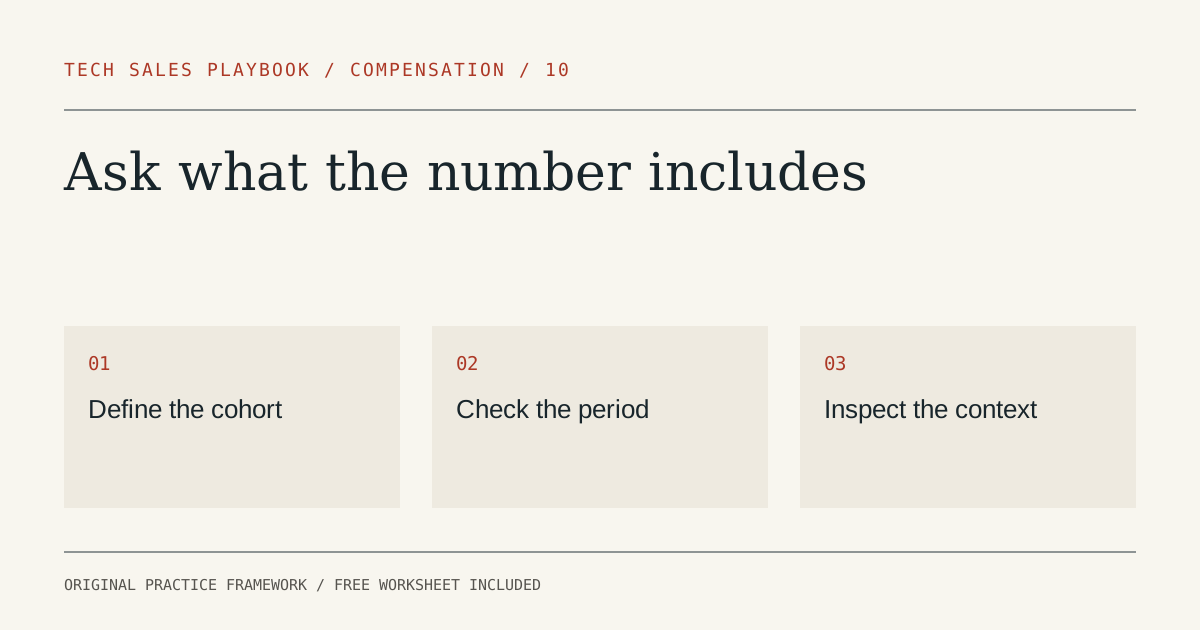
Preview this playbookBefore interpreting a quota-attainment claim, ask who is included, which period is measured, and how ramped and new reps are treated. “Most reps hit quota” is not enough to estimate your likely earnings. Even a well-defined historical number cannot guarantee your future result.
Salesforce's quota-planning documentation treats ramp and seasonality as planning considerations. That context is a reason to ask about comparable periods and cohorts, not to assume a particular adjustment in your offer.
Ask for the definition first
Start with: “When you describe attainment, is that the share of fully ramped reps who reached target, or average attainment across the whole team?” These are different measures. A few very high performers can affect an average without showing what the typical rep experienced.
Then ask which segment and role the number covers. Enterprise AEs, inbound SDRs, and outbound BDRs may have different targets, territories, and ramp periods. A company-wide figure can hide those differences.
| Question | What it helps clarify |
|---|---|
| Which period? | Whether the figure covers a month, quarter, or year |
| Which cohort? | Whether the roles and territories resemble yours |
| How is ramp treated? | Whether new reps are included or excluded |
| Which measure? | Median attainment, average attainment, or share at target |
| What changed afterward? | Whether the historical conditions still apply |
Work through a denominator example
Imagine a fictional team with ten fully ramped reps, six of whom reach quota in a quarter. The share at quota is 60% for that defined cohort and period. It does not tell you the average attainment, the results of new hires, or the probability that you personally will reach quota.
If the company adds five new reps next quarter, comparing the all-rep figure with the earlier ramped-only figure would change the denominator. Ask for like-for-like context instead of treating the change as automatically good or bad.
Connect the answer to your offered role
Ask how your territory and lead sources will be assigned, what target applies during ramp, and whether the plan has recently changed. These questions connect the aggregate history to the work you would actually do.
The employer may not share detailed data. Record that limitation without turning missing information into a fabricated estimate. Evaluate guaranteed base pay separately, keep variable-pay scenarios conditional, and compare written terms. If a decision depends heavily on a number nobody can define, that uncertainty belongs in your offer comparison.
Use the free worksheet
Download the quota attainment questions to ask before accepting a sales offer worksheet. It opens in a spreadsheet and requires no signup. Use fictional details for practice and your approved systems for real customer or employer information.
Choose your next step
Sales Quota Due Diligence Before You Commit to an Offer explains the free exercise, the relevant paid resource, and who it fits. Read the product preview before deciding whether you need the broader self-study manual.
Continue with Recoverable vs. Nonrecoverable Draw: Questions for a Sales Offer.
Put this guide to work
The Comp Playbook
Compare pay plans, model cash scenarios, and negotiate specific terms.
$19 USD · One-time purchase · Downloadable PDF
Preview this playbookRead the sample and see what is included before you buy.