Use this as a working guide, not a passive read. Skim the sections, copy the frameworks, then connect the advice to a real role, interview, call, or account you are working on this week.
Start with a free resourceDownload this guide's free practice worksheetNo signup required.
Put this guide to work
The Enterprise Playbook
$19 USD · One-time purchase · Downloadable PDF
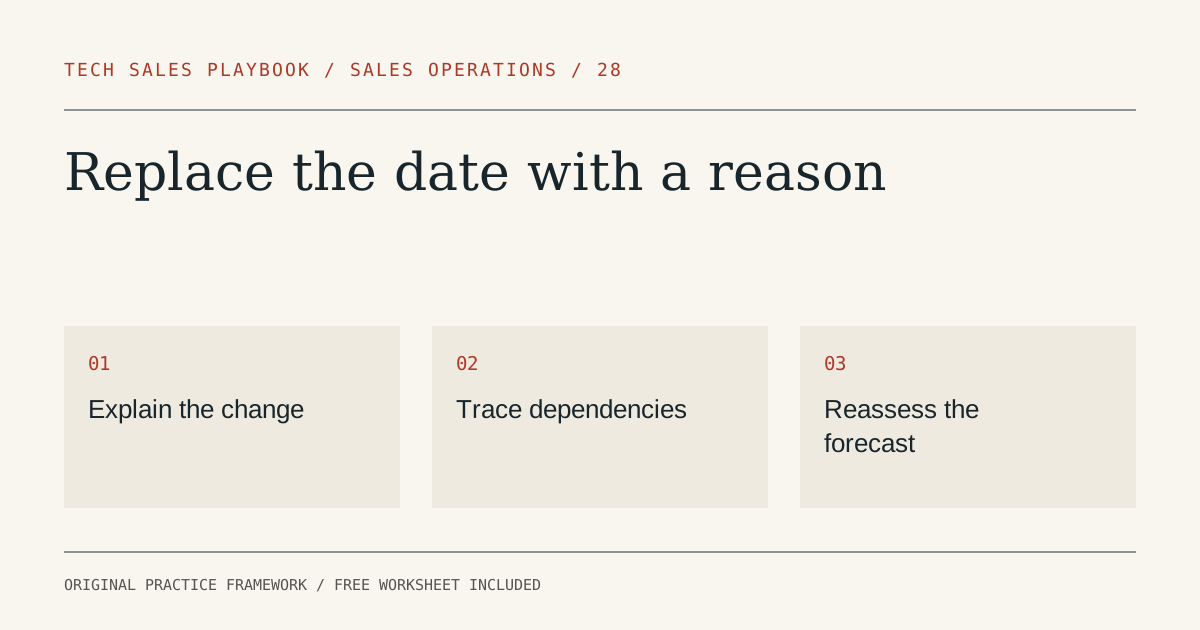
Preview this playbookWhen a close date slips, explain the new evidence and the dependency that now controls timing. Do not simply move the date to the last day of the next month. A forecast update should make the uncertainty easier for your manager to inspect.
Salesforce's Pipeline Inspection guidance provides product context for pipeline review. The update format below is an original worksheet, independent of any particular CRM configuration.
Identify which assumption failed
Was the previous date tied to a buyer deadline, an estimated review duration, or an internal target? Record that basis honestly. A customer can want a rollout date without having completed the approvals required to purchase.
| Update element | Fictional example |
|---|---|
| Previous assumption | Security review expected this week |
| New evidence | Buyer requested another deployment-scope clarification |
| Dependency | Specialist response and buyer review |
| Owner | Named internal specialist and buyer reviewer |
| Timing | Response date being confirmed; approval date unknown |
Write a concise manager update
“The prior close date assumed security review would finish this week. The buyer has requested scope clarification, and the specialist is confirming when the response can be provided. Approval timing is still unknown. I am reviewing the forecast category under our criteria rather than treating the next month-end as a confirmed date.”
This update distinguishes work in progress from completed approval. Adapt the language to your organization's categories rather than inventing a new forecast standard.
Trace the remaining sequence
List the dependencies between the open step and the purchase: technical approval, commercial review, procurement, signature, or another actual requirement. Some may run in parallel; others cannot start until the earlier step finishes. Confirm that sequence with the buyer.
Do not add arbitrary buffers to create a precise-looking date. When timing is unknown, make the unknown explicit and identify the next event that would improve the estimate.
Review for repeated patterns
If a deal has slipped several times, inspect whether the same unsupported assumption keeps returning. Repeated movement may reveal a missing decision owner or an inactive project rather than merely slow administration.
For practice, take a fictional forecast note that says “pushed to next month, still confident.” Rewrite it with a changed fact, dependency, owner, and uncertainty. Ask a colleague what they can now verify. The update should support a better management decision even when it contains fewer reassuring words.
Use the free worksheet
Download the when a sales close date slips worksheet. It opens in a spreadsheet and requires no signup. Use fictional details for practice and your approved systems for real customer or employer information.
Choose your next step
Sales Forecast Update Practice for Slipped Close Dates explains the free exercise, the relevant paid resource, and who it fits. Read the product preview before deciding whether you need the broader self-study manual.
Put this guide to work
The Enterprise Playbook
Plan complex accounts, align stakeholders, and guide evaluation through rollout.
$19 USD · One-time purchase · Downloadable PDF
Preview this playbookRead the sample and see what is included before you buy.
Need the broader set? Compare The Deal Execution Bundle for $39. Includes this book.

