Use this as a working guide, not a passive read. Skim the sections, copy the frameworks, then connect the advice to a real role, interview, call, or account you are working on this week.
Start with a free resourceDownload the mutual action planNo signup required. Browse the free resource library
Put this guide to work
The Enterprise Playbook
$19 USD · One-time purchase · Downloadable PDF
Preview this playbookSalesforce should reflect the deal well enough that a manager or teammate can understand the evidence without reconstructing it from memory. Exact objects, fields, stages, and forecast categories vary by organization; follow your documented process.
Create an Opportunity at the Defined Threshold
Know what evidence permits creation: accepted meeting, confirmed problem, qualified discovery, or another company-specific event. Do not create opportunities solely to increase pipeline reporting.
Salesforce's official guidance explains that sales stages should reflect the business's sales process. A stage name is useful only when the team shares exit criteria.
Maintain Five Evidence Blocks
- 1Problem and consequence: what is happening, who is affected, and why it matters.
- 2Decision: criteria, participants, approvals, and procurement steps.
- 3People: contacts, roles, influence, and missing stakeholders.
- 4Timing: target event, dependencies, and evidence supporting the close date.
- 5Next step: owner, date, purpose, and expected output.
Separate buyer statements from seller hypotheses.
Update After Every Material Interaction
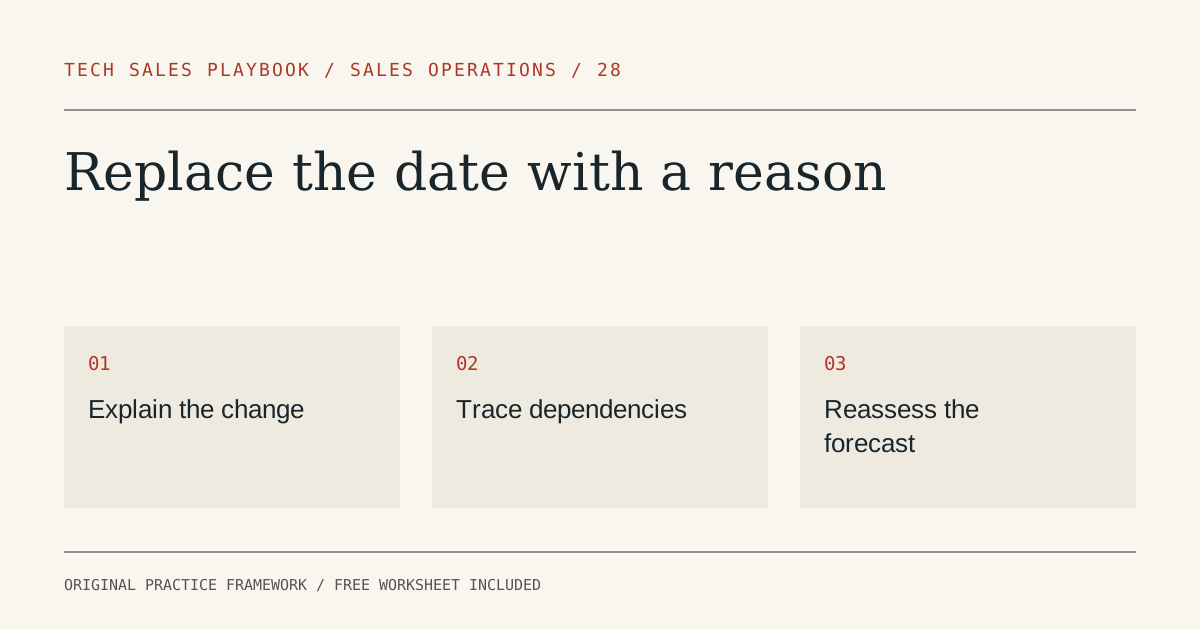
Record the decision-relevant summary, changed evidence, promised actions, and next meeting. Update stage or close date when evidence changes—not because the forecast meeting is approaching.
Run a Weekly Inspection
Review opportunities with no future task, stale stages, unsupported close dates, single-threaded contacts, missing decision steps, and untested champions. Choose an action or downgrade the record. A smaller accurate forecast is more useful than inflated coverage.
Handoff and Collaboration
Link relevant call notes and documents, assign clear actions, and preserve history. Never place secrets, credentials, sensitive personal information, or unapproved customer data in free-text fields.
AE Checklist
- Stage matches exit evidence.
- Close date has a buyer or process reason.
- Next step is mutual and dated.
- Stakeholder map shows gaps.
- Forecast category matches company definition.
- Qualification fields contain evidence, not optimistic labels.
Use the Salesforce workflow for SDRs for pre-opportunity hygiene, MEDDIC discovery questions for evidence gaps, and the AE 30-60-90 plan to build this inspection into ramp.
Inspect the Pipeline Weekly
Turn clean opportunity records into an AE weekly pipeline review, and use the MEDDPICC scorecard to document evidence, gaps, owners, and next actions.
Before opportunity creation, use the Salesforce lead-management workflow for SDRs. AEs can audit how they present ownership with the account-executive resume example.
Put this guide to work
The Enterprise Playbook
Plan complex accounts, align stakeholders, and guide evaluation through rollout.
$19 USD · One-time purchase · Downloadable PDF
Preview this playbookRead the sample and see what is included before you buy.
Need the broader set? Compare The Deal Execution Bundle for $39. Includes this book.