Use this as a working guide, not a passive read. Skim the sections, copy the frameworks, then connect the advice to a real role, interview, call, or account you are working on this week.
Start with a free resourceDownload this guide's free practice worksheetNo signup required.
Put this guide to work
The Outbound Playbook
$19 USD · One-time purchase · Downloadable PDF
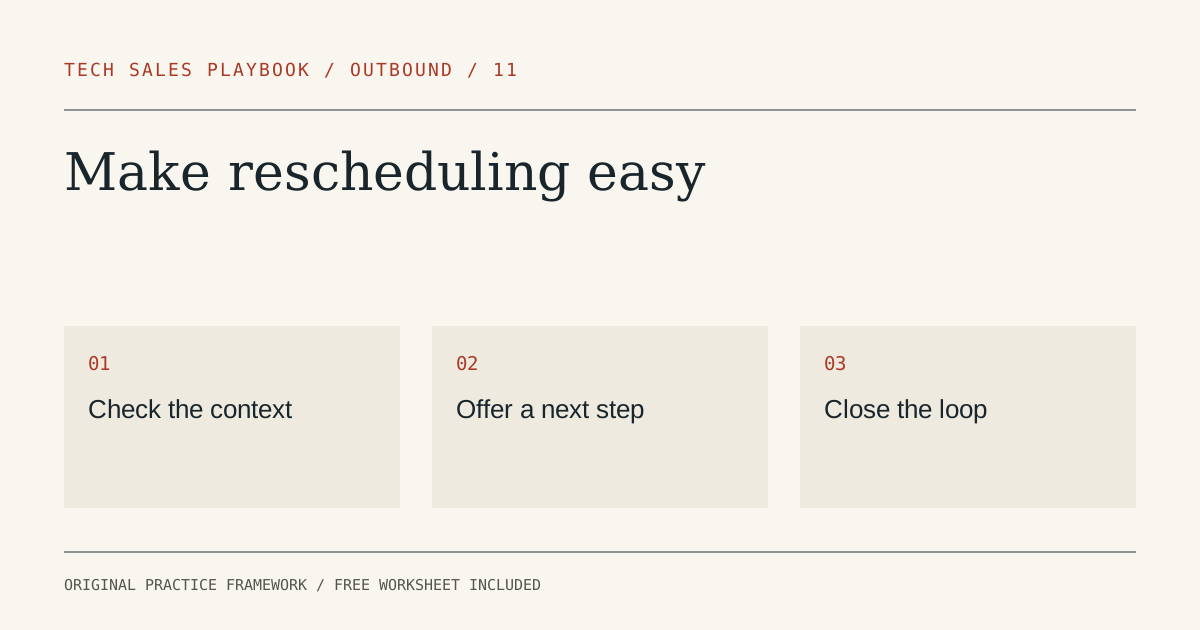
Preview this playbookAfter a prospect misses a sales meeting, check the invite and time zone, send a neutral message, and make rescheduling easy. Avoid guilt, manufactured urgency, or assuming the person has rejected the project. A missed meeting is an event to clarify, not proof of intent.
HubSpot discusses no-show follow-up. The two examples and stop rule below are original practice material; they are not response-rate claims.
Check before writing
Confirm that the meeting link worked, the invitation reached the intended attendee, and no cancellation or reply is waiting elsewhere. Coordinate with the AE if you booked the meeting for another rep. Two colleagues sending different reschedule requests can create avoidable confusion.
Write down the original reason for meeting. If nobody can explain that reason beyond “a demo,” repair the context before asking for more time.
First message: a neutral reset
Subject: Rescheduling the support workflow discussion
Hi Morgan — we missed each other for today's discussion about support handoffs. If that is still useful, I can do Tuesday at 10 a.m. or Wednesday at 2 p.m. Eastern. If priorities changed, let me know and I'll update my notes.
This fictional example gives a recognizable purpose, specific options, and room to decline. Replace the times and workflow with accurate details. Do not claim you waited for a particular duration if you did not.
Second message: close the open loop
If a follow-up is appropriate under your team's process, keep it brief: “Checking once more on the support handoff discussion. Should we find another time, revisit later, or close this out for now?” A later response can reopen the conversation; an indefinite sequence is not necessary to preserve that possibility.
| Situation | Next action |
|---|---|
| Prospect proposes a time | Confirm the time zone and send one updated invite |
| Prospect says later | Ask for a useful trigger or agreed date |
| Prospect declines | Close the loop and respect the answer |
| No response after your bounded follow-up | Stop the immediate chase and update the record |
Improve the next booked meeting
Review whether the original invite stated the purpose, expected attendees, and what the conversation would help decide. A calendar acceptance is helpful context but does not guarantee attendance. Avoid turning a single no-show into a sweeping diagnosis of your messaging.
Track meetings held separately from meetings booked and rescheduled. One meeting moved twice is still one opportunity to have a conversation. Use the pattern across a defined period to identify where clearer expectations might help, without claiming that a particular email caused the improvement.
Use the free worksheet
Download the sales meeting no-show follow-up worksheet. It opens in a spreadsheet and requires no signup. Use fictional details for practice and your approved systems for real customer or employer information.
Choose your next step
Sales Meeting Recovery: Practice Better No-Show Follow-Up explains the free exercise, the relevant paid resource, and who it fits. Read the product preview before deciding whether you need the broader self-study manual.
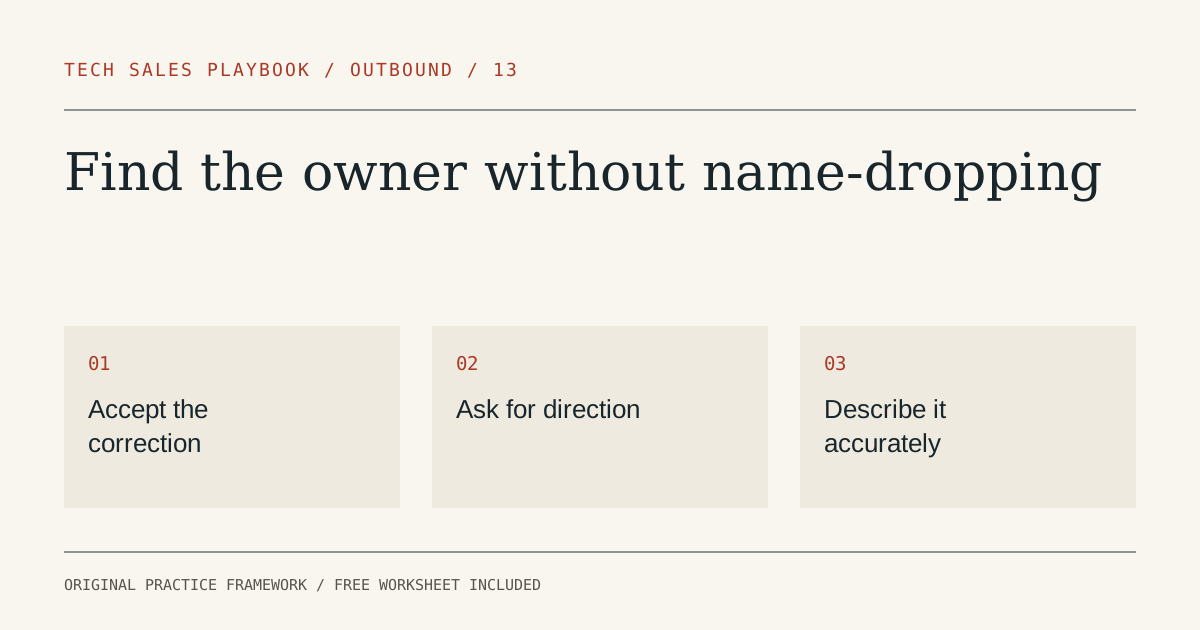
Continue with ‘Not the Right Person’: Ask for Direction Without Inventing a Referral.
Put this guide to work
The Outbound Playbook
Build relevant outreach and measure the response with clear definitions.
$19 USD · One-time purchase · Downloadable PDF
Preview this playbookRead the sample and see what is included before you buy.
Need the broader set? Compare The Prospecting Bundle for $39. Includes this book.