Use this as a working guide, not a passive read. Skim the sections, copy the frameworks, then connect the advice to a real role, interview, call, or account you are working on this week.
Start with a free resourceDownload this guide's free practice worksheetNo signup required.
Put this guide to work
The Discovery Playbook
$19 USD · One-time purchase · Downloadable PDF
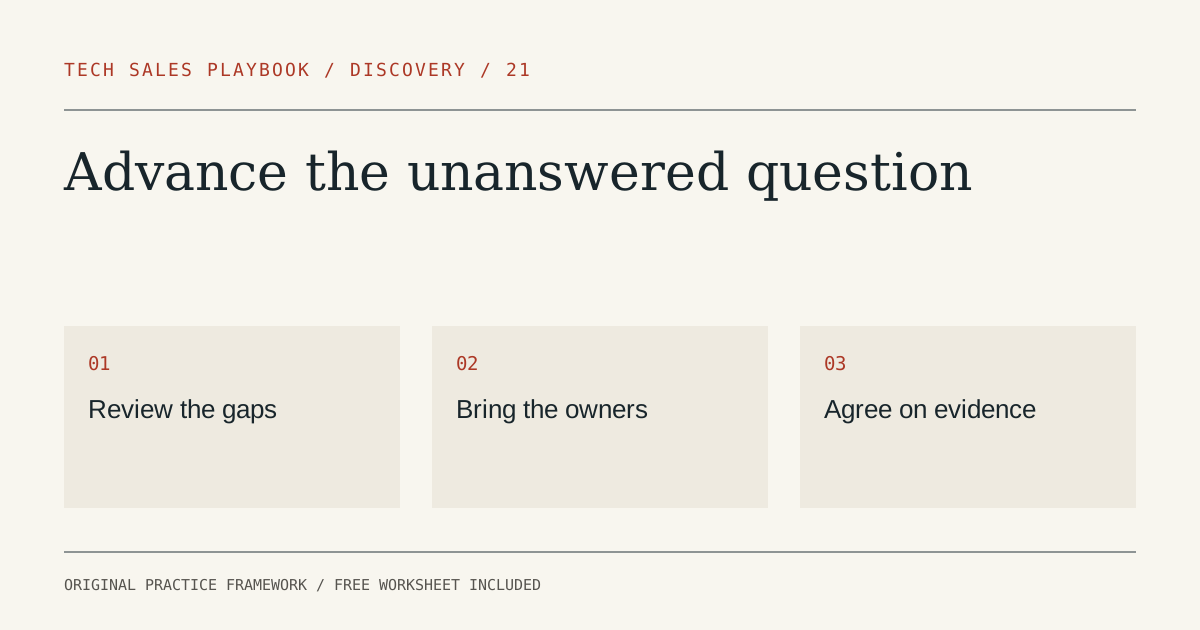
Preview this playbookA second discovery call should resolve questions left open by the first conversation. Start from the recap, identify what could change the next decision, and invite the people who can supply that context. Repeating the same qualification checklist makes the buyer do the same work twice.
GitLab's metrics guidance emphasizes the evidence behind value discussions. The agenda below is an original planning exercise for a follow-up conversation.
Choose the decision before the agenda
Write one sentence describing what the meeting should help decide: whether to evaluate a workflow, involve a technical owner, or stop because the problem is not a priority. “Learn more” is too vague to choose attendees or prepare questions.
Sort first-call notes into confirmed facts, assumptions, and unanswered questions. Send a short proposed agenda that lets the buyer correct your understanding before the meeting.
| Segment | Purpose | Example question |
|---|---|---|
| Confirm context | Check what changed | Is the handoff problem still the priority? |
| Fill a gap | Learn the missing workflow | Who handles exceptions today? |
| Inspect impact | Find evidence and its owner | Where is rework recorded? |
| Map a decision | Understand the next approval | What would justify a bounded evaluation? |
| Agree next step | Assign an action | Who will validate the sample and when? |
An original fictional example
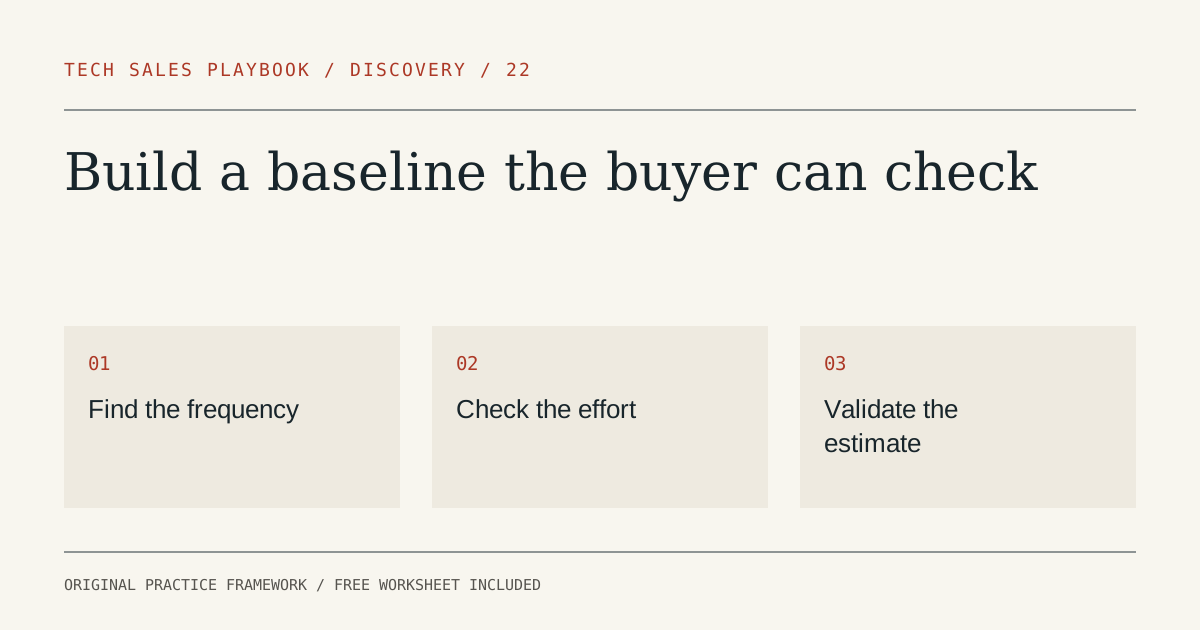
The first call established that support tickets lose context between shifts. The second call includes the operations owner, who can explain exceptions, and an analyst, who knows whether rework is measured. The meeting is useful if it produces a credible baseline or identifies that no measurement exists yet. It need not end with a demo booking.
Do not ask the analyst to confirm a savings figure you invented before the call. Ask what the records can actually show and what would require a separate measurement exercise.
Close with a smaller, clearer commitment
Summarize the new information, the remaining uncertainty, and the next decision. An action needs an owner who accepts it; assigning a task aloud does not establish agreement. If the buyer cannot prioritize the work, record that reality rather than stretching the meeting into a false commitment.
For practice, take a fictional first-call recap and delete every question already answered. Build the second agenda only from the gaps that matter. Have a colleague explain what decision each question supports. Remove questions with no useful connection.
Use the free worksheet
Download the second discovery call agenda worksheet. It opens in a spreadsheet and requires no signup. Use fictional details for practice and your approved systems for real customer or employer information.
Choose your next step
Second Discovery Call Practice for Better Follow-Up Conversations explains the free exercise, the relevant paid resource, and who it fits. Read the product preview before deciding whether you need the broader self-study manual.
Continue with Quantify Business Pain in Discovery Without Inventing ROI.
Put this guide to work
The Discovery Playbook
Understand the customer’s workflow, test impact, and clarify the next decision.
$19 USD · One-time purchase · Downloadable PDF
Preview this playbookRead the sample and see what is included before you buy.
Need the broader set? Compare The Deal Execution Bundle for $39. Includes this book.