Use this as a working guide, not a passive read. Skim the sections, copy the frameworks, then connect the advice to a real role, interview, call, or account you are working on this week.
Start with a free resourceDownload this guide's free practice worksheetNo signup required.
Put this guide to work
The Enterprise Playbook
$19 USD · One-time purchase · Downloadable PDF
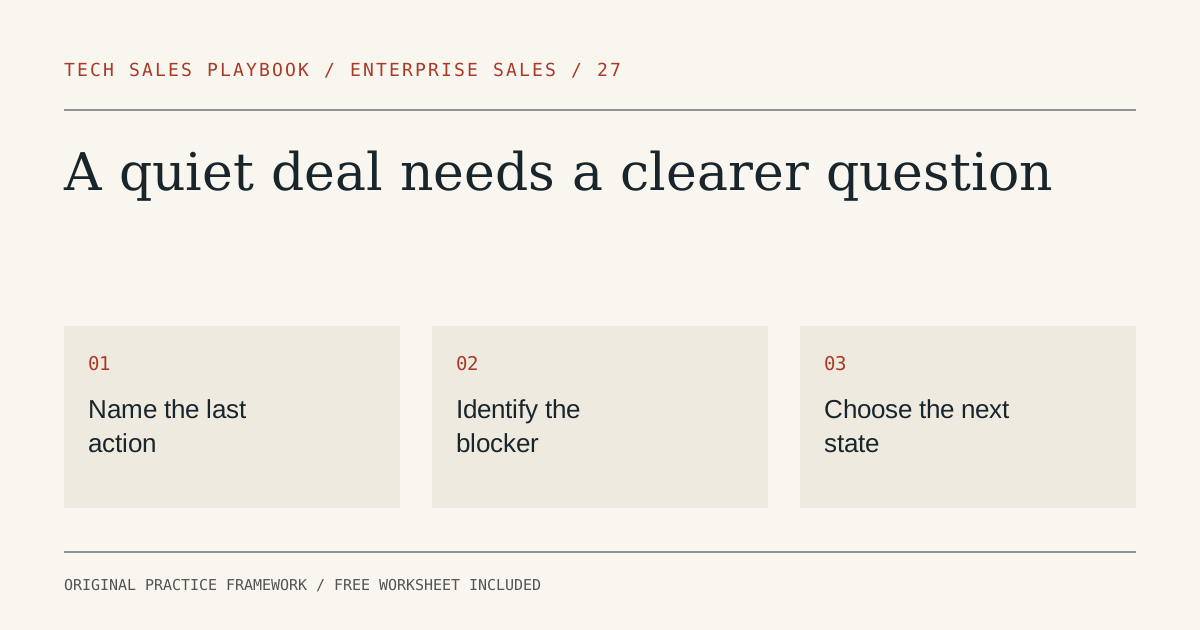
Preview this playbookA stalled deal may have a specific dependency, or the buyer may no longer be pursuing the change. Start with the last verified buyer action and ask what decision remains active. More follow-up messages do not resolve the difference by themselves.
GitLab's go-to-market guidance distinguishes opportunity stages and loss reasons. Apply your own stage definitions; the diagnostic below is an original conversation aid.
Separate a blocker from missing priority
A security review awaiting a named reviewer is a specific dependency. “They are busy” without an agreed project or owner is much less precise. Do not invent a procurement problem merely because the buyer has stopped responding.
| Evidence | Question to ask |
|---|---|
| Review is active with an owner | What input is needed to complete it? |
| Sponsor has changed roles | Who now owns the underlying decision? |
| Priority has shifted | Should the project pause or close for now? |
| No current buyer action | Is the original decision still being considered? |
Write a useful reset message
Original fictional example: “When we last spoke, the open question was whether the routing change would fit the support rollout. Is that decision still active? If another priority has replaced it, we can close the evaluation for now rather than keep a date that no longer reflects your plans.”
This gives the buyer a clear way to correct the record. It does not threaten to withdraw a fictional discount or assume that silence means approval.
Rebuild the next step from evidence
If the project is active, name the blocking question, the person who can answer it, and the accepted action. If there is no meaningful next step, discuss a pause or close-out under your team's process. An internal hope that the buyer will return is not a customer commitment.
Keep prior notes because they may explain future context, but do not preserve an unsupported near-term forecast simply to avoid moving the opportunity.
Practice the three outcomes
Use a fictional deal in which a technical owner is unavailable, another in which the sponsor left, and a third in which the customer chose no change. Write a different next action for each. The exercise is complete when the status reflects the evidence, even if the result is a smaller pipeline.
Review stalled opportunities using buyer actions and unresolved decisions rather than the number of touches logged. Activity can describe your effort while still saying little about whether a purchase is progressing.
Use the free worksheet
Download the stalled sales deal or no decision? diagnose before following up again worksheet. It opens in a spreadsheet and requires no signup. Use fictional details for practice and your approved systems for real customer or employer information.
Choose your next step
Stalled Deal Diagnosis for Enterprise Sales Reps explains the free exercise, the relevant paid resource, and who it fits. Read the product preview before deciding whether you need the broader self-study manual.
Continue with Sales-to-Customer-Success Handoff: Transfer Promises, Scope, and Risks.
Put this guide to work
The Enterprise Playbook
Plan complex accounts, align stakeholders, and guide evaluation through rollout.
$19 USD · One-time purchase · Downloadable PDF
Preview this playbookRead the sample and see what is included before you buy.
Need the broader set? Compare The Deal Execution Bundle for $39. Includes this book.