Use this as a working guide, not a passive read. Skim the sections, copy the frameworks, then connect the advice to a real role, interview, call, or account you are working on this week.
Start with a free resourceDownload this guide's free practice worksheetNo signup required.
Put this guide to work
The Outbound Playbook
$19 USD · One-time purchase · Downloadable PDF
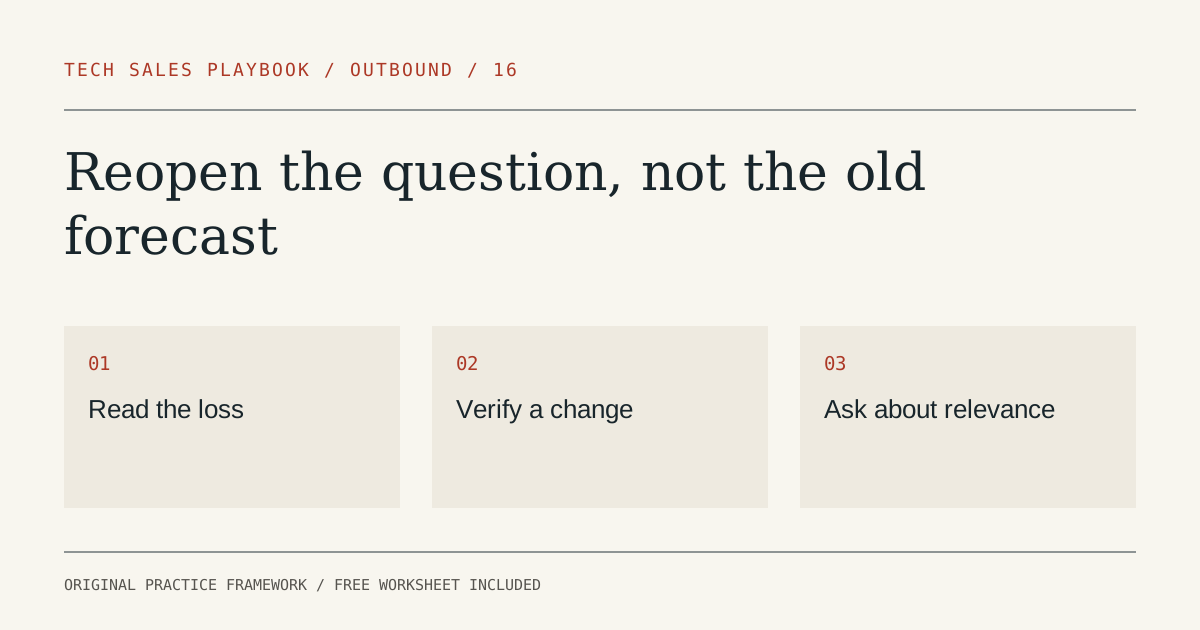
Preview this playbookReengage a closed-lost account when you have a relevant reason to revisit the original decision. Read the loss notes, check account ownership, and identify what has actually changed. An old opportunity in the CRM is not evidence that the buyer is still evaluating.
GitLab's go-to-market guidance documents opportunity stages and loss reasons. Your CRM process may differ. The review below is an original approach to preparing a new conversation.
Start with why the evaluation ended
Distinguish a timing delay from a product gap, a competing priority, a competitor decision, or a lack of fit. If the note only says “no response,” do not convert it into a confirmed budget problem. Read the available approved context and ask the former owner when appropriate.
| Original reason | Possible reason to revisit | What to verify |
|---|---|---|
| Timing | An agreed planning period has arrived | Whether the project still exists |
| Product gap | A relevant capability is now available | Actual scope and limitations |
| Different priority | The buyer describes a changed priority | Whether the old use case remains relevant |
| Poor fit | Usually no automatic reason | Whether the fit itself changed |
Write around the changed fact
Original fictional example: “Morgan, your team paused the routing evaluation because the required approval step was missing. That workflow is now available in the configuration described here. I do not know whether the project is still relevant, but would it be useful to check whether this addresses the earlier gap?”
Only use a capability claim after confirming it with the product team or approved documentation. If nothing has changed, a generic “circling back” email does not manufacture a new reason to buy.
Treat the response as new evidence
The buyer may have solved the problem another way, changed roles, or abandoned the project. Ask what is different now before reusing old qualification notes. Do not restore the previous close date or value simply because someone replies.
If the person says no or asks you to stop, update the record and respect that answer. Repeatedly reopening an unsuitable account can crowd out better work.
Review the quality of reactivation
For practice, choose three fictional loss reasons and write a different reengagement condition for each. Mark one case where you would not contact the account. A useful review asks whether the new message is justified and truthful, not how many old records you can put into a sequence. Track new conversations separately from resurrected CRM values.
Use the free worksheet
Download the closed-lost reengagement email worksheet. It opens in a spreadsheet and requires no signup. Use fictional details for practice and your approved systems for real customer or employer information.
Choose your next step
Closed-Lost Reactivation With a Credible Reason to Reconnect explains the free exercise, the relevant paid resource, and who it fits. Read the product preview before deciding whether you need the broader self-study manual.
Continue with Hiring-Trigger Prospecting: Use Job Posts Without Inventing Pain.
Put this guide to work
The Outbound Playbook
Build relevant outreach and measure the response with clear definitions.
$19 USD · One-time purchase · Downloadable PDF
Preview this playbookRead the sample and see what is included before you buy.
Need the broader set? Compare The Prospecting Bundle for $39. Includes this book.