Use this as a working guide, not a passive read. Skim the sections, copy the frameworks, then connect the advice to a real role, interview, call, or account you are working on this week.
Start with a free resourceDownload the mutual action planNo signup required. Browse the free resource library
Put this guide to work
The Enterprise Playbook
$19 USD · One-time purchase · Downloadable PDF
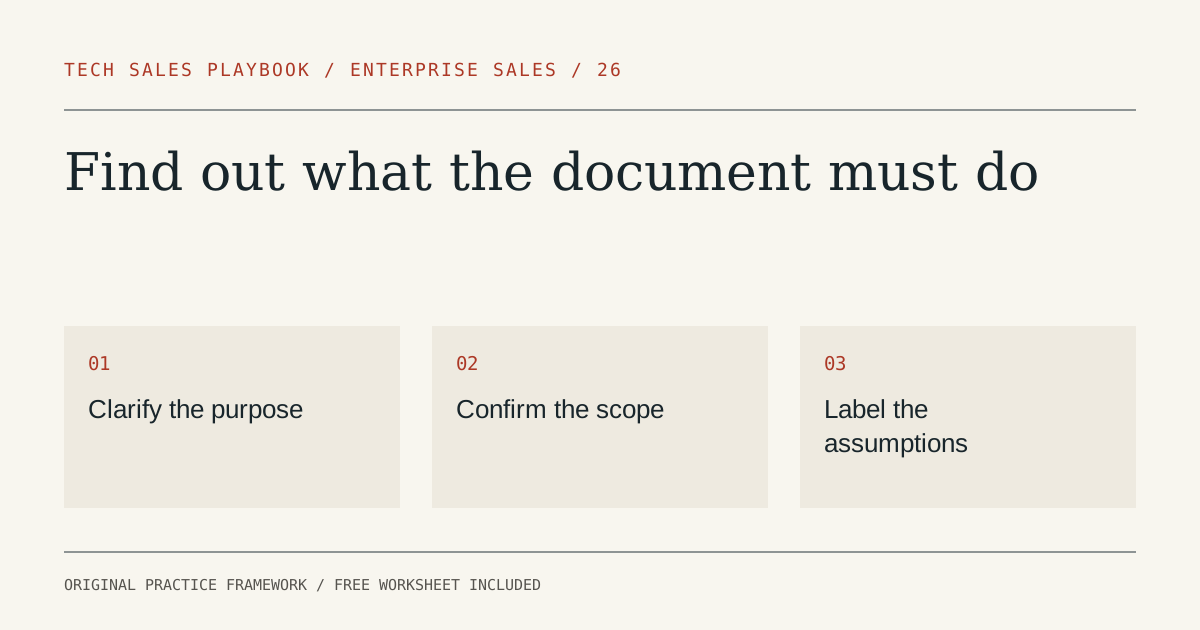
Preview this playbookAn executive business review should help an existing customer decide what to continue, change or investigate. A deck full of activity counts does not automatically explain business value. Start with the customer's agreed outcomes and the decisions that require executive attention. This guide covers a post-sale account review, not an initial sales presentation or a renewal negotiation.
Agree on the purpose before building slides
Ask the customer owner what has changed since the last review and which decisions would make this meeting useful. Confirm who should attend and what each person needs to contribute. If the only open item is a support incident, use the established support process instead of relabeling an incident meeting as an executive review.
GitLab's EBR handbook describes a strategic customer meeting involving relevant stakeholders. It offers context for this type of review; the agenda and fictional exercise here are our own. Follow your account team's actual responsibilities and the customer's preferences rather than assuming a universal quarterly cadence.
Prepare an evidence sheet
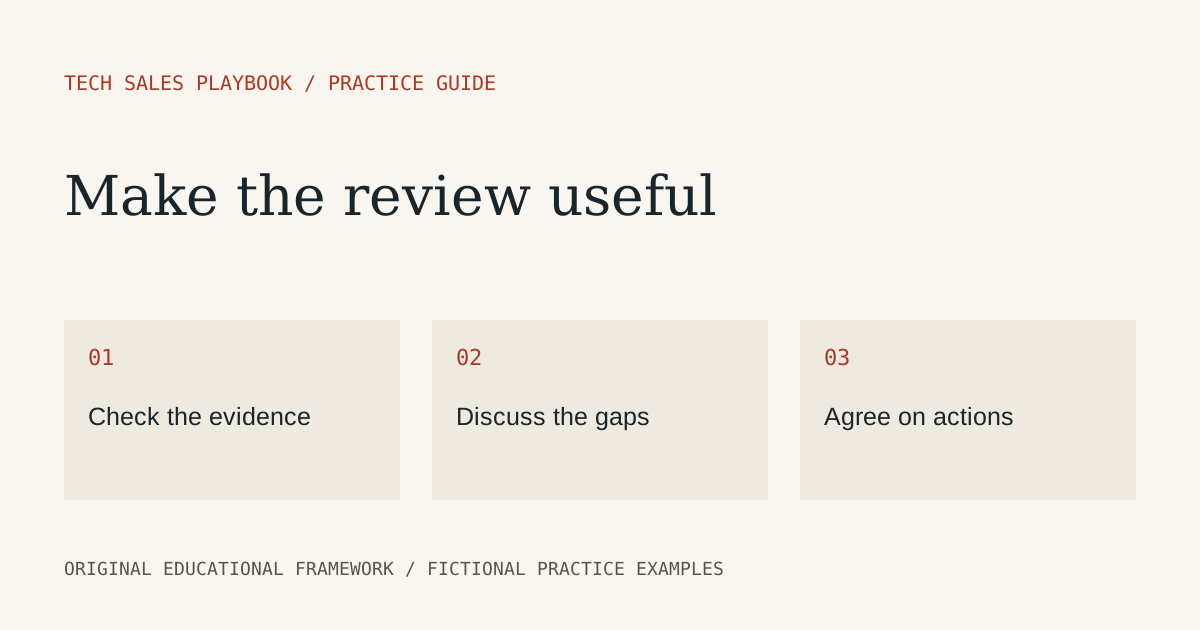
For each agreed outcome, capture the starting point, current observation, measurement period, source and customer owner who can validate it. Add limitations next to the number. Product usage can be useful operational evidence, but an increase in logins does not by itself establish saved money or improved revenue.
Keep four labels visible: observed, customer-confirmed, estimated and unknown. If the baseline was never recorded, say so. You can agree to establish one now without inventing a historical comparison. Use the business-impact discovery guide when you need to clarify the measurement itself.
Try a 45-minute decision agenda
This is a suggested agenda, not a required format:
- 1Five minutes: confirm current priorities and the decisions sought.
- 2Ten minutes: review outcomes and the evidence behind them.
- 3Ten minutes: examine adoption gaps, obstacles and unresolved commitments.
- 4Ten minutes: discuss upcoming changes and realistic options.
- 5Ten minutes: agree on actions, owners, dates and the next evidence check.
Send a concise pre-read through approved channels. Put detailed usage charts in an appendix if they do not inform a decision. Invite corrections before presenting a metric as an agreed result. Do not surprise a customer leader with an expansion pitch disguised as a value review.
Reframe a fictional slide
Suppose a fictional account team reports “80 active users, up from 50.” That is an observation if the source and comparable time windows are valid. It does not establish that the customer's reporting process is faster. Ask which teams are active, what work they complete, and whether the customer has measured the workflow they originally wanted to improve.
A better slide might say: “Active usage increased in the measured period. The reporting-time baseline is missing. Operations will define the measurement and collect a sample before the next review. The executive decision today is whether the team can allocate an owner.” This preserves the useful observation while making the evidence gap actionable.
If the customer says a commitment was missed, record the issue and involve the accountable team. Do not hide the problem behind a success slide or promise a delivery date you cannot approve. An honest review can end with remediation work rather than an expansion opportunity.
Leave with a decision record
Write the decision, accountable owner, due date, dependency and evidence needed to confirm completion. Distinguish a proposal from an accepted commitment. Send a recap through the agreed channel and invite corrections. Keep account data in approved systems; use fictional information when practicing outside them.
The executive-review preparation resources explain when this free agenda is enough and when broader enterprise-sales study fits. For a separate commercial renewal conversation, use renewal discovery questions. For continuing account coordination, return to enterprise account planning.
Put this guide to work
The Enterprise Playbook
Plan complex accounts, align stakeholders, and guide evaluation through rollout.
$19 USD · One-time purchase · Downloadable PDF
Preview this playbookRead the sample and see what is included before you buy.
Need the broader set? Compare The Deal Execution Bundle for $39. Includes this book.