Use this as a working guide, not a passive read. Skim the sections, copy the frameworks, then connect the advice to a real role, interview, call, or account you are working on this week.
Start with a free resourceDownload this guide's free practice worksheetNo signup required.
Put this guide to work
The Outbound Playbook
$19 USD · One-time purchase · Downloadable PDF
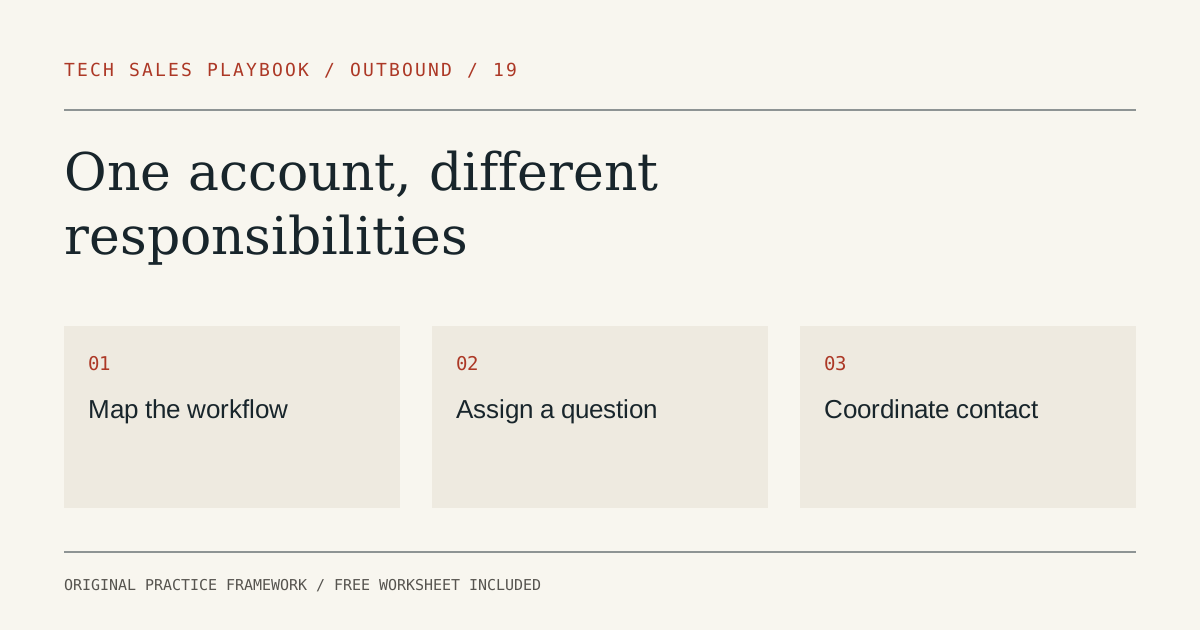
Preview this playbookMulti-threaded outbound means researching more than one relevant role in an account and coordinating how you engage them. It should not mean sending the same message to everyone. Map each role to a responsibility, an unanswered question, and an internal contact owner.
GitLab's account-planning guidance connects planning with customer growth and retention. The small outbound map below is an original exercise for deciding who might have relevant context before an opportunity exists.
Start with the workflow, not the org chart
Suppose a fictional company is reviewing support handoffs. Operations may care about ownership, a technical team about configuration, and finance about the cost of any proposed change. Those are hypotheses about responsibilities. Verify them through research and conversation rather than assuming titles determine authority.
| Function | Possible question | Unsupported assumption to avoid |
|---|---|---|
| Operations | How are unresolved tasks assigned? | They must be dissatisfied |
| Technical team | Who maintains routing rules? | They have approved integration work |
| Finance | How are changes evaluated financially? | They already have budget |
Coordinate before contacting
Check existing relationships, active opportunities, and account ownership. A colleague may already have a useful conversation. Agree who will contact which role and what context can be shared. Do not imply that another stakeholder supports your proposal merely because they replied to an email.
Original opening for operations: “Who owns the handoff process between support shifts?” A technical opening might ask who maintains the routing configuration. The second message should not claim operations requested it unless that actually happened.
Use responses to revise the map
If operations explains that an external provider owns the workflow, update your assumptions. If a contact offers an introduction, record what was offered and follow the agreed path. A map is a living record of evidence, not a diagram you defend after the buyer corrects it.
Avoid escalating to more senior people as a way to punish a nonresponse. Wider outreach needs its own relevant rationale and must follow your team's contact and ownership rules.
Run a coordination drill
Give two reps the same fictional account and ask each to draft outreach independently. Compare the drafts for duplicate asks, inconsistent claims, and overlapping ownership. Then create one shared map and revise. The output should be fewer contradictions and clearer responsibility, not the largest possible number of contacts per account.
Use the free worksheet
Download the multi-threaded outbound worksheet. It opens in a spreadsheet and requires no signup. Use fictional details for practice and your approved systems for real customer or employer information.
Choose your next step
Multi-Threaded Outbound Practice for Coordinated Account Outreach explains the free exercise, the relevant paid resource, and who it fits. Read the product preview before deciding whether you need the broader self-study manual.
Continue with Outbound Reply Triage: Route Interest, Referrals, Delays, and Stops.
Put this guide to work
The Outbound Playbook
Build relevant outreach and measure the response with clear definitions.
$19 USD · One-time purchase · Downloadable PDF
Preview this playbookRead the sample and see what is included before you buy.
Need the broader set? Compare The Prospecting Bundle for $39. Includes this book.