Use this as a working guide, not a passive read. Skim the sections, copy the frameworks, then connect the advice to a real role, interview, call, or account you are working on this week.
Start with a free resourceDownload this guide's free practice worksheetNo signup required.
Put this guide to work
The Comp Playbook
$19 USD · One-time purchase · Downloadable PDF
Preview this playbookA sales commission accelerator raises the commission rate under specified conditions, often after a target is reached. To calculate it, identify the threshold, split eligible credit into the correct tiers, and apply the written rules. Do not assume the higher rate applies to every sale in the period.
Salesforce's variable-compensation overview describes tiered accelerator plans. The numbers below are our own hypothetical arithmetic example, not a market benchmark or a description of your employer's plan.
Work through a marginal accelerator
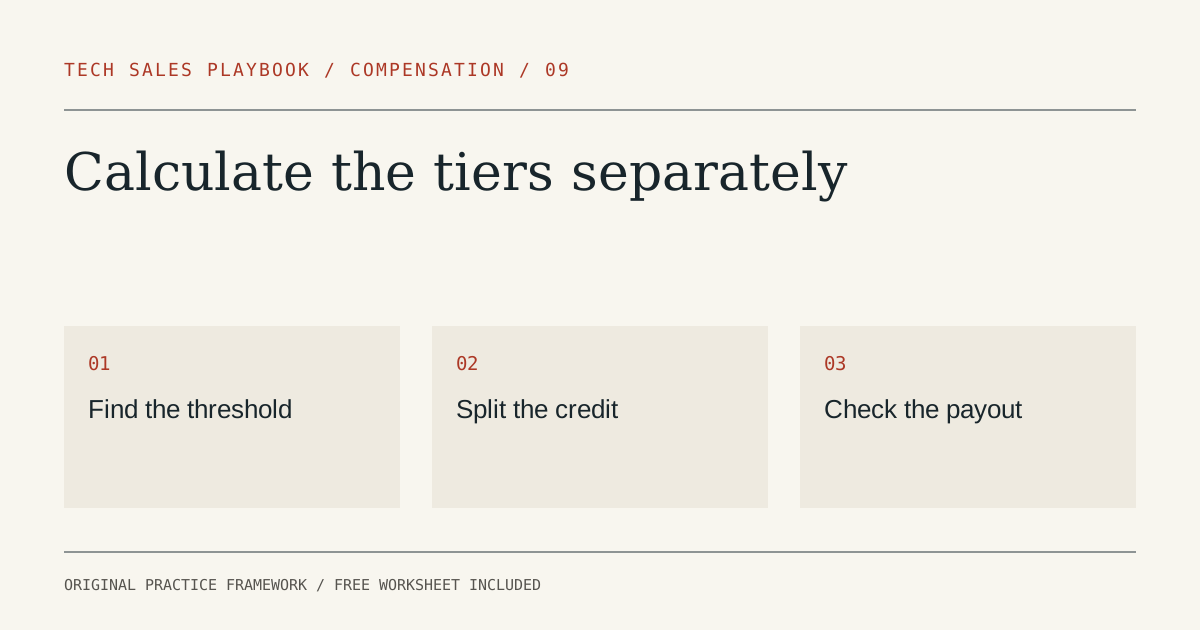
Assume a $100,000 eligible-sales threshold, a 10% rate up to that threshold, and a 15% rate only on eligible credit above it. If the rep produces $120,000 of eligible credit, split the amount before multiplying.
| Portion | Calculation | Commission |
|---|---|---|
| First $100,000 | $100,000 × 10% | $10,000 |
| Next $20,000 | $20,000 × 15% | $3,000 |
| Total | $10,000 + $3,000 | $13,000 |
Applying 15% to the entire $120,000 would give $18,000. That is a different, retroactive assumption. It is not the result of the marginal plan above. Ask which structure the written plan actually uses.
Check what counts as eligible credit
A contract's headline amount may differ from commissionable credit. The plan may define credit using recurring revenue, bookings, collections, or another measure. It may also include split-credit rules. Read those definitions before using a deal amount in the calculation.
Keep the quota period and payout period distinct. A monthly payment does not necessarily mean the threshold resets monthly. Ask how adjustments are handled if credit changes after an earlier calculation.
Compare the full curve
An attractive above-quota rate tells you little about earnings below target. Calculate several hypothetical attainment points using the same definitions. Include any stated thresholds, decelerators, caps, or exclusions rather than projecting a single straight line.
For example, a plan with a stronger accelerator may still pay less in your below-target scenario. That does not make either plan universally better; it explains why the comparison depends on actual rules and uncertain performance.
Validate your worksheet with the employer
Send the worked example and ask whether it matches the plan. If it does not, request the corrected calculation and controlling rule. Avoid using an online OTE calculator for tiered mechanics unless it explicitly supports those rules. A simple base-plus-variable estimate can be useful for orientation, but it cannot replace a commission statement or the written plan.
Keep this exercise separate from forecasts of what you will earn. The arithmetic can be exact while attainment remains uncertain.
Use the free worksheet
Download the sales commission accelerators worksheet. It opens in a spreadsheet and requires no signup. Use fictional details for practice and your approved systems for real customer or employer information.
Choose your next step
Compare Sales Commission Plans Beyond Headline OTE explains the free exercise, the relevant paid resource, and who it fits. Read the product preview before deciding whether you need the broader self-study manual.
Continue with Quota Attainment Questions to Ask Before Accepting a Sales Offer.
Put this guide to work
The Comp Playbook
Compare pay plans, model cash scenarios, and negotiate specific terms.
$19 USD · One-time purchase · Downloadable PDF
Preview this playbookRead the sample and see what is included before you buy.