Use this as a working guide, not a passive read. Skim the sections, copy the frameworks, then connect the advice to a real role, interview, call, or account you are working on this week.
Start with a free resourceBuild your free demo rehearsal briefNo signup required.
Put this guide to work
The Discovery Playbook
$19 USD · One-time purchase · Downloadable PDF
Inspect the sample and contentsTechnical discovery should help you decide what to demonstrate, what to investigate and whether the proposed solution fits. A long list of questions is less useful than a short conversation whose answers change your next action.
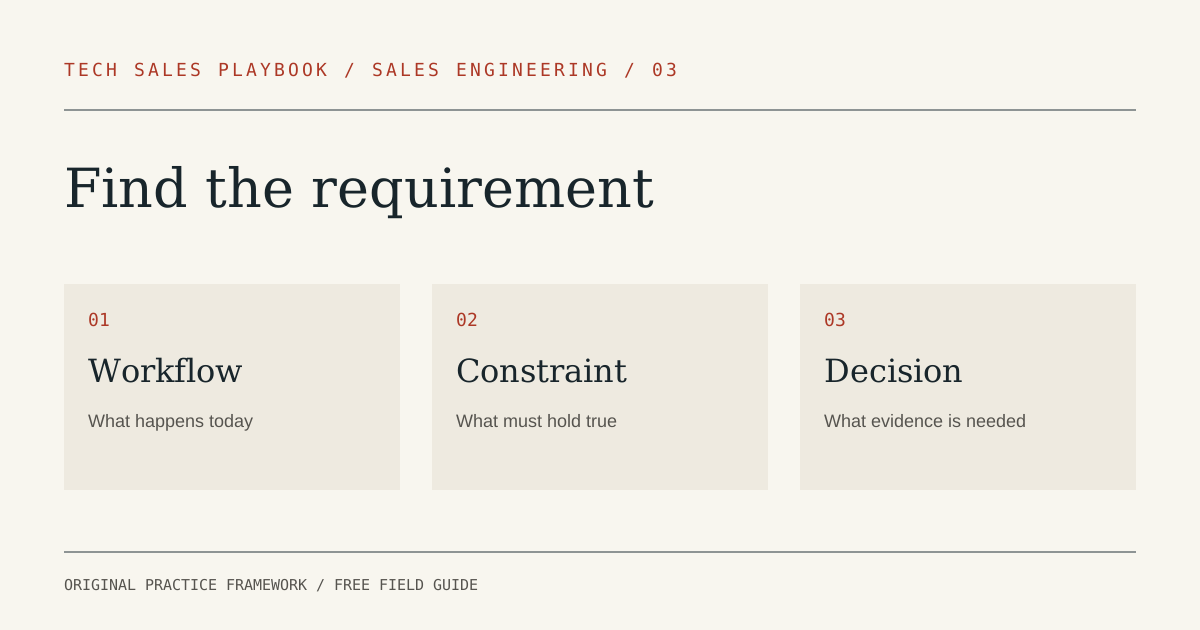
Start with the customer's current workflow. Then explore constraints, the people involved and the evidence needed for a decision. The question set below is an original practice aid. Adapt it to the role, product and information you are authorized to discuss.
Start with an event, not a feature
Ask the buyer to describe the last time the problem happened. “Walk me through what happened after the request arrived” can reveal a sequence that a feature wishlist misses. Follow the work across people and systems before drawing an architecture diagram.
In a fictional scenario, a support manager asks for automatic ticket assignment. You learn that urgent requests arrive through two channels and that the second channel does not capture a team identifier. A routing rule may be only part of the solution. The missing input deserves attention before the demonstration.
Connect each question to a decision
| Question | What the answer can change |
|---|---|
| Where does the workflow start, and what triggers it? | The starting state to show in a demo |
| Which step requires manual judgment? | What can be automated and what needs an exception path |
| Which system owns the required information? | The integration and data-validation work |
| Who may view or change that information? | Permission requirements to investigate |
| What happens when a step fails? | The recovery behavior to demonstrate or validate |
| What would convince the team to proceed? | The evidence and decision criteria for an evaluation |
Avoid asking every question in sequence regardless of the answer. Reflect your understanding and follow the uncertainty that matters most. If the issue is missing input data, another feature question may be less useful than identifying who owns that data.
Separate a business priority from a technical requirement
A priority describes what someone wants to improve. A requirement describes what the proposed workflow must do or respect. “Reduce handoff confusion” is a priority. “Only the assigned team can change ownership” is a requirement to clarify and verify.
Ask how a requirement will be evaluated and who can confirm it. Do not convert an informal preference into a mandatory procurement condition without checking. Similarly, do not treat a stated security requirement as satisfied because a feature name sounds related.
Practice a short recap
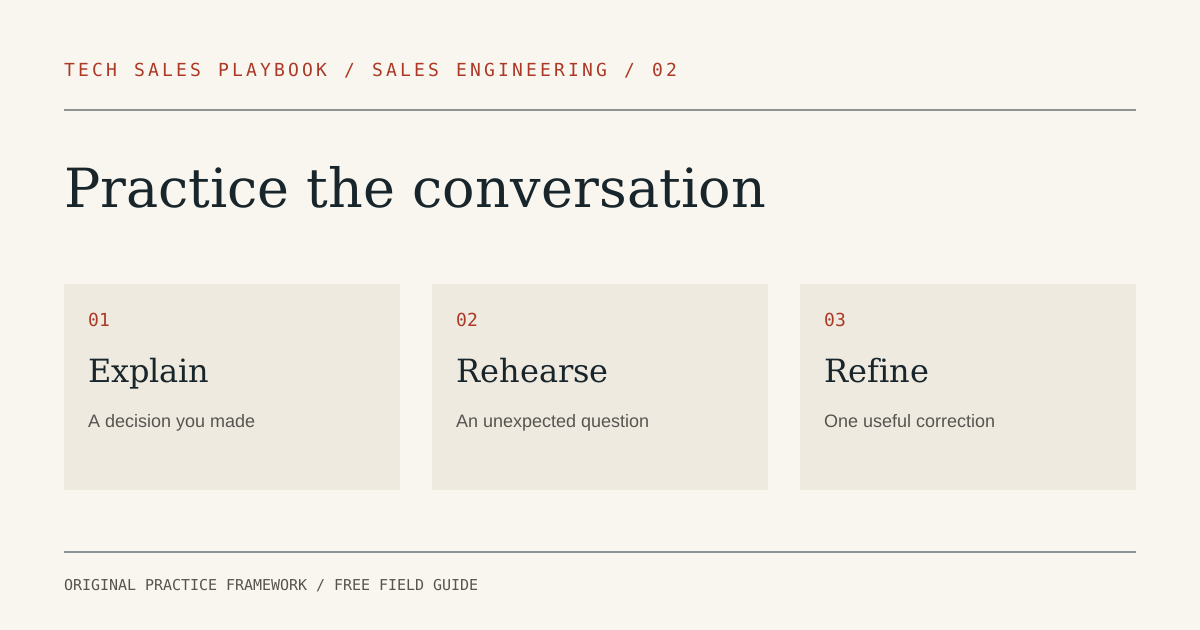
Original fictional recap: “You want the next shift to see an explicit owner and the assignment history. We know the email channel supplies the team field; we have not confirmed that for chat. I will demonstrate the email workflow and label the chat path as an open validation item. Your administrator can help us confirm the input mapping.”
That recap makes the scope inspectable. It also lets the buyer correct a misunderstanding before you build the wrong demonstration. In an interview, state which details came from the brief and which you assumed for practice.
Turn discovery into a demo brief
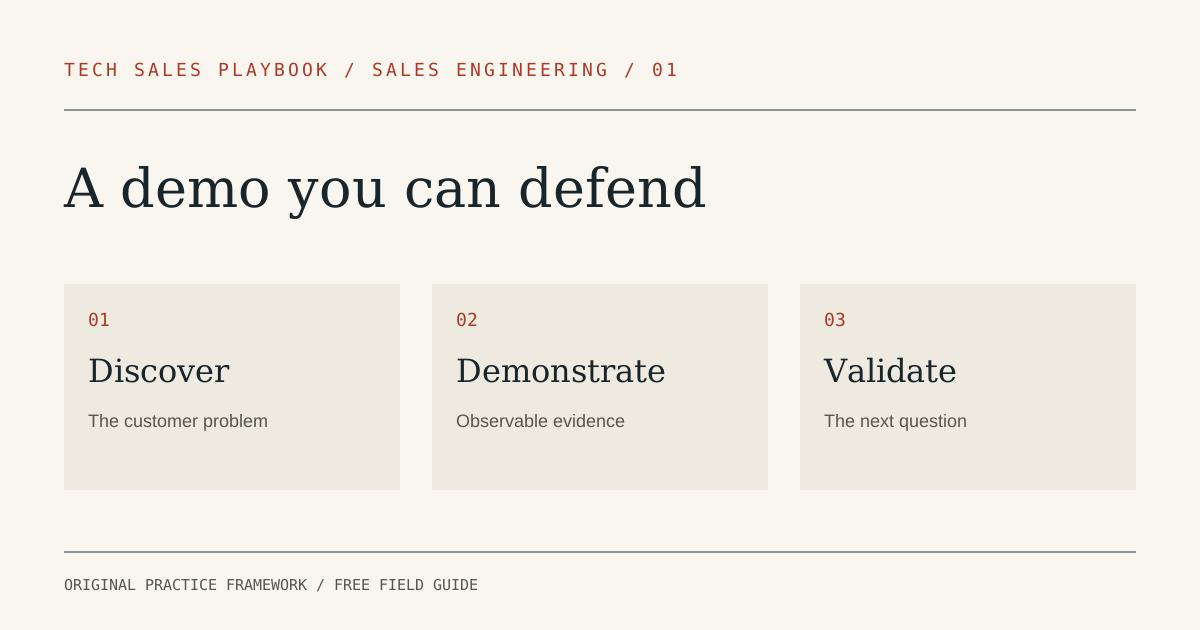
Capture five items: the audience, the current workflow, the decision to support, the evidence to show and the unresolved constraint. Add only the next step that the other person actually agreed to. Use the free demo planner to organize a fictional rehearsal.
For a real customer engagement, keep information in approved company systems and follow the team's account ownership process. The preparation tool is for practice notes, not a replacement for customer records.
Read the demo interview guide to turn your brief into a walkthrough. The existing Discovery Playbook adds general conversation frameworks and worksheets; preview it to judge whether it addresses your current gap. The sales engineering section connects this exercise to resume and transition preparation.
Put this guide to work
The Discovery Playbook
Build the underlying sales conversation and preparation skills. This existing sales guide complements the SE exercises; it is not product-specific technical training.
$19 USD · One-time purchase · Downloadable PDF
Inspect the sample and contentsRead the sample and see what is included before you buy.
Need the broader set? Compare The Deal Execution Bundle for $39. Includes this book.