Use this as a working guide, not a passive read. Skim the sections, copy the frameworks, then connect the advice to a real role, interview, call, or account you are working on this week.
Start with a free resourceBuild your free demo rehearsal briefNo signup required.
Put this guide to work
The Tech Sales Interview Playbook
$29 USD · One-time purchase · Downloadable PDF
Inspect the sample and contentsPrepare a solutions engineer interview by practicing the work you may need to explain: understanding a buyer, demonstrating a relevant workflow, discussing technical constraints and deciding what to validate next. Ask the recruiter which exercises are actually included before spending days building a demo.
The exercises below are original practice prompts. They are not leaked questions or a promise about any employer's interview process. GitLab's role description offers one example of a presales role connecting technical knowledge with customer outcomes; individual jobs differ in product depth, coding expectations and ownership.
Exercise one: explain a technical decision twice
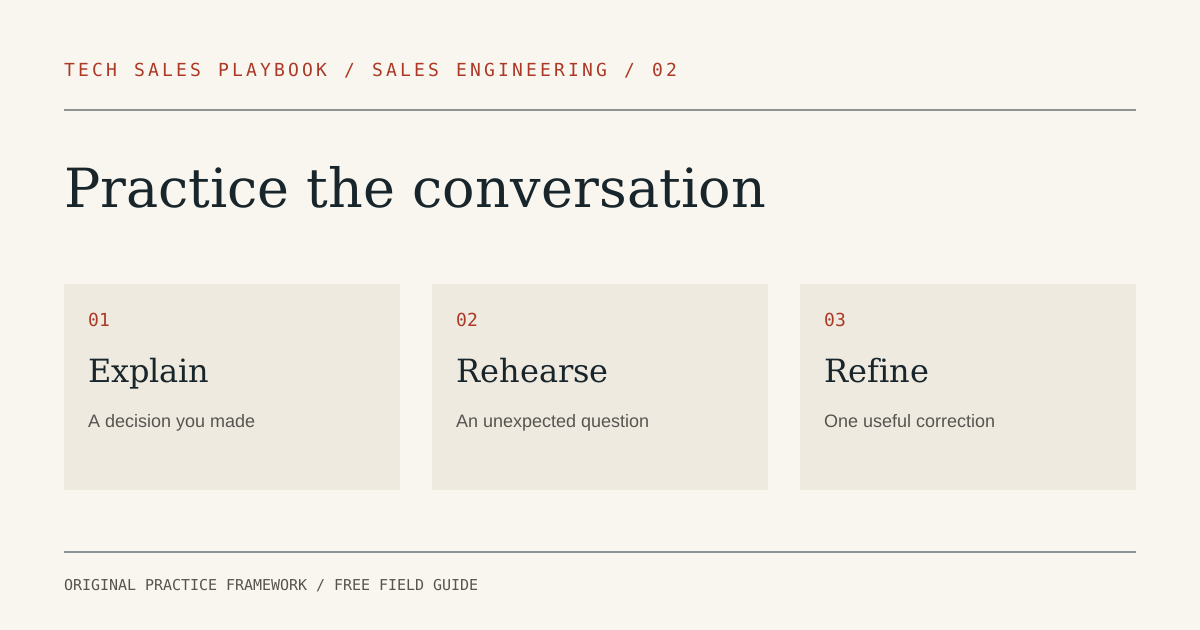
Choose a real project you can discuss. Explain one design decision to an administrator investigating implementation, then to a business stakeholder deciding whether the workflow is worth changing. Keep the underlying facts consistent while changing the detail.
For a fictional ticket-routing project, the administrator may need to understand inputs, rule precedence and exceptions. The operations lead may need to understand ownership and what happens when a ticket cannot be assigned. Replacing technical language with a vague claim about efficiency does not answer either audience well.
Exercise two: discover before recommending
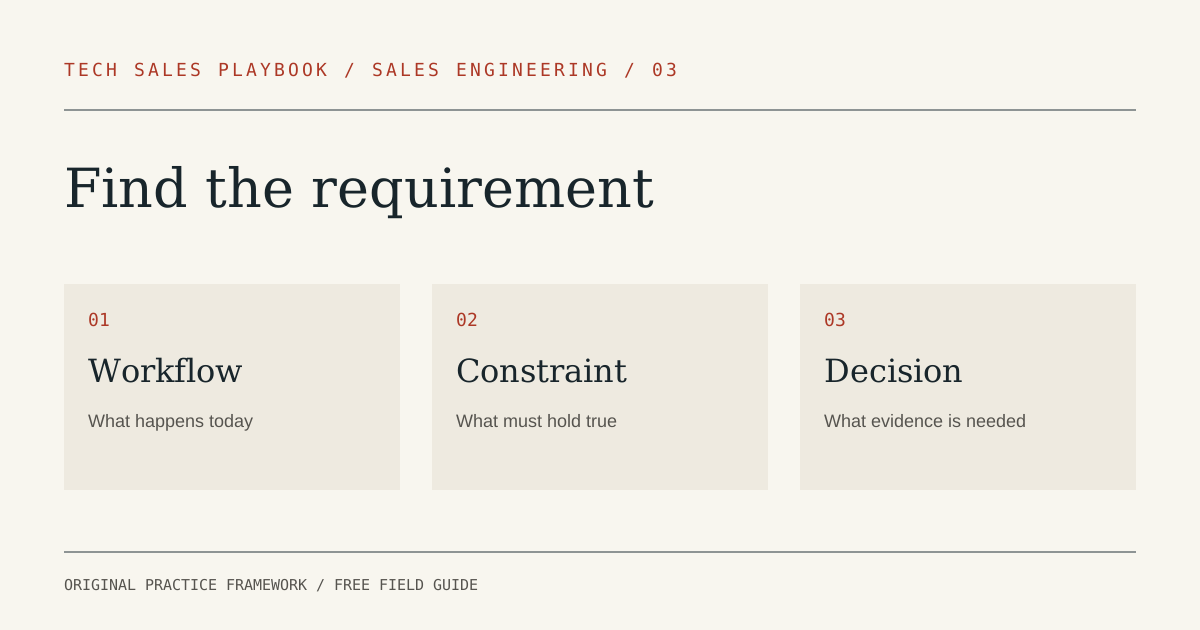
Prompt: a buyer asks for a dashboard because their weekly reporting takes too long. Ask three questions before proposing a solution. Investigate how the report is assembled, who acts on it and which step causes the delay.
A strong response might discover that inconsistent definitions cause the work, so a new chart alone will not solve the problem. Evaluate whether your questions could change your recommendation. Use the discovery practice guide for an expanded version.
Exercise three: choose what to demonstrate
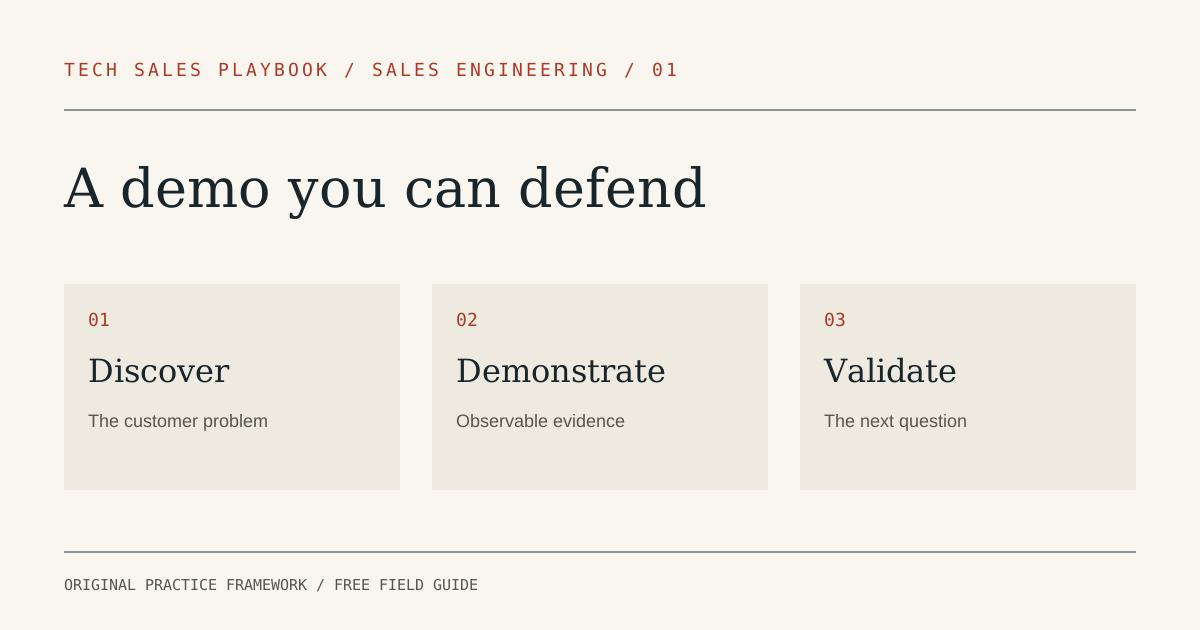
Prompt: you have eight minutes and five possible features. Select one customer workflow, describe the starting condition, show the relevant action and explain what the result establishes. Name what you deliberately leave for later.
Your choice should follow the buyer's priority. Avoid choosing the most visually impressive feature if it cannot answer the assigned question. Build the outline in the demo planner, then rehearse with a partner interrupting once.
Exercise four: handle an unknown integration
Prompt: the customer needs data from a system you have never integrated. Explain what you know, what you need to investigate and how you would return with an answer.
Discuss the required workflow before listing technologies. Questions might include the data involved, authorization, supported interfaces, update frequency and acceptable failure behavior. Do not use the presence of an API as proof that the full integration is feasible. Document the next validation action and its owner.
Exercise five: define a bounded evaluation
Prompt: a stakeholder says, “Let's try it for a month.” Turn that request into a specific evaluation question. Identify the dataset, workflow, success evidence, constraints, owner and decision the result will inform.
A fictional routing evaluation could examine whether a defined set of synthetic tickets receives the expected assignment, including documented exception cases. That is different from proving a revenue increase or a production service-level commitment. Read the POC success-criteria guide for more preparation.
Exercise six: discuss a mistake you owned
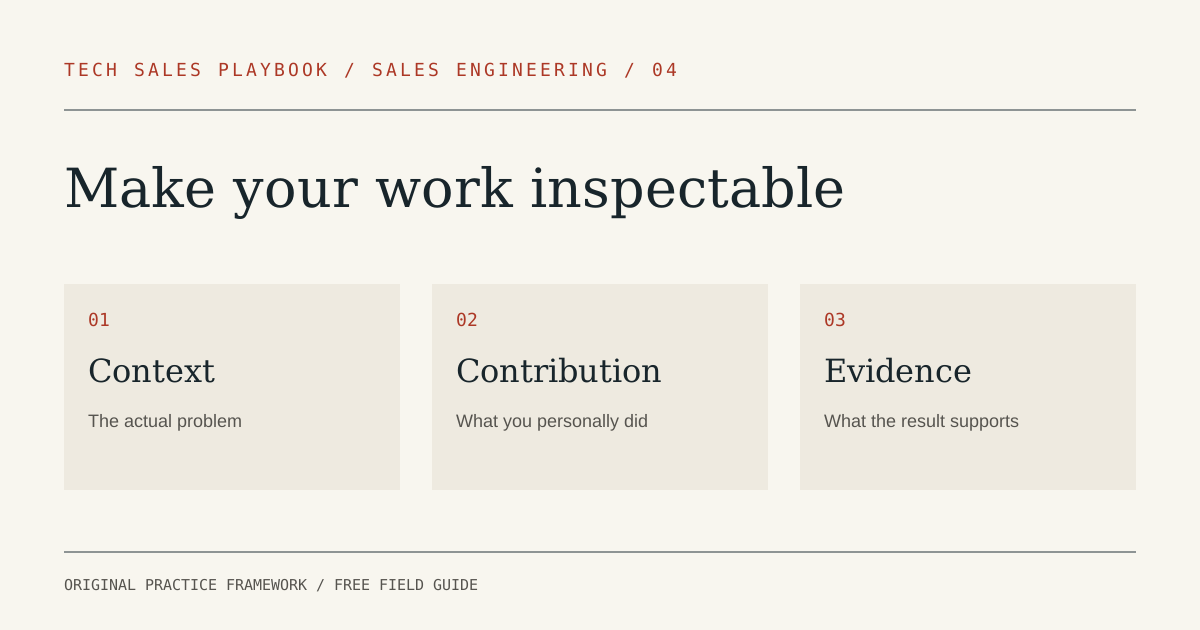
Choose an example where your first explanation or approach was incomplete. Describe the information you had, the decision you made, the signal that exposed the problem and the correction. Be precise about your own contribution and protect confidential customer details.
If your background is support or engineering, use a real example from that work. You do not need to invent a sales win. Explain the relevant behavior and the presales experience you still need to develop.
Turn practice into a useful feedback loop
Score each attempt as missing, partial or clear on five questions: did I understand the task, use evidence, explain a decision, state uncertainty and propose an appropriate next step? This is a personal practice tool, not a hiring prediction.
Repeat the weakest exercise rather than memorizing six polished scripts. For general interview structure and story preparation, inspect the Tech Sales Interview Playbook. It is a broader sales resource; the free exercises here focus on the solutions-engineering context. Return to the sales engineering hub to choose the next task.
Put this guide to work
The Tech Sales Interview Playbook
Build the underlying sales conversation and preparation skills. This existing sales guide complements the SE exercises; it is not product-specific technical training.
$29 USD · One-time purchase · Downloadable PDF
Inspect the sample and contentsRead the sample and see what is included before you buy.