Use this as a working guide, not a passive read. Skim the sections, copy the frameworks, then connect the advice to a real role, interview, call, or account you are working on this week.
Start with a free resourceDownload the call-practice scorecardNo signup required. Browse the free resource library
Put this guide to work
The Cold Calling + Mock Call Playbook
$29 USD · One-time purchase · Downloadable PDF
Preview this playbookHealthcare outreach fails when a rep treats a regulated operating environment like a generic SaaS account. Do not ask for patient information, imply that a product guarantees compliance, or use clinical disruption as a scare tactic.
Know the Boundary Before Calling
The HHS HIPAA Security Rule overview explains that regulated entities must protect the confidentiality, integrity, and availability of electronic protected health information through administrative, physical, and technical safeguards. It does not say every healthcare organization has the same workflow or that buying your product creates compliance.
Build a hypothesis from public information: expansion to new locations, a patient portal launch, hiring in revenue cycle or IT, an announced partnership, or a stated access initiative. Keep the opening operational.
“I noticed the network is adding three outpatient locations. Teams often revisit user provisioning and support handoffs during that expansion. Is that relevant to your group, or owned elsewhere?”
“We Cannot Share Patient or Security Information”
“Agreed, and I am not asking for it. I only want to understand whether this type of workflow is under review and which function owns evaluation.”
Never encourage the prospect to disclose protected health information, credentials, incident details, or screenshots.
“We Need Legal and Security Review”
Do not frame review as friction to bypass.
“That makes sense. What evidence does the review team normally require, and at what point should they enter the process?”
Ask about documented steps, owners, and lead time. The HHS explanation of covered entities and business associates is useful background, but legal classification belongs to qualified counsel and the organization.
“Implementation Would Disrupt Clinicians”
“Protecting clinical time sounds like the constraint. Which part of implementation creates the most concern—training, workflow change, integration, or support coverage?”
Then ask how the buyer measures acceptable disruption. Do not promise zero downtime or effortless adoption unless your company can substantiate it for the exact scope.
“We Already Use an Approved Vendor”
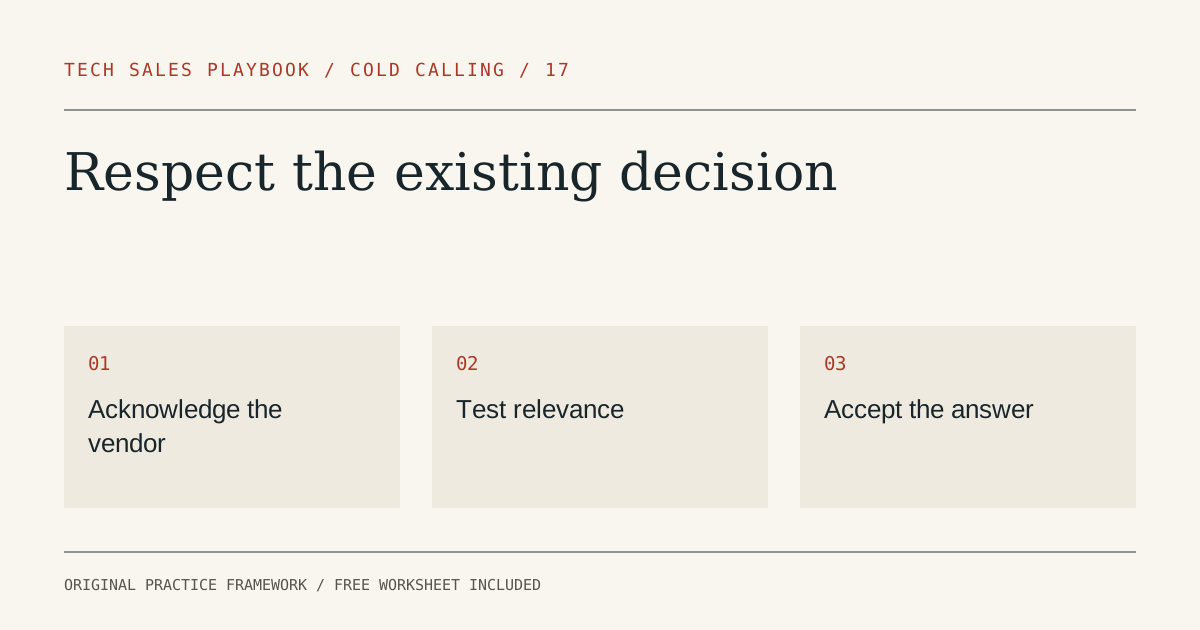
Clarify the decision:
“Understood. Is the current vendor meeting the workflow outcome, or does approved status make any alternative impractical right now?”
If there is no active problem, close respectfully. If there is a gap, learn who owns it and what evidence would justify evaluation.
Call Review Checklist
- Did the opener use public information?
- Did the rep avoid patient-level questions?
- Were compliance and security claims qualified?
- Did the rep respect procurement and clinical ownership?
- Is the next step proportionate to the evidence?
Practice with the cold-call scorecard, use MEDDIC discovery questions to organize evidence, and review cybersecurity objections for security-team conversations.
Compare Another People-Data Context
Use the HR-tech objection guide to practice cautious data-handling language without making compliance claims.
Put this guide to work
The Cold Calling + Mock Call Playbook
A complete cold-call and mock-call system for SDR candidates, BDRs, and reps who need booked meetings.
$29 USD · One-time purchase · Downloadable PDF
Preview this playbookRead the sample and see what is included before you buy.
Need the broader set? Compare The Prospecting Bundle for $39. Includes this book.