Use this as a working guide, not a passive read. Skim the sections, copy the frameworks, then connect the advice to a real role, interview, call, or account you are working on this week.
Start with a free resourceDownload the call-practice scorecardNo signup required. Browse the free resource library
Put this guide to work
The Cold Calling + Mock Call Playbook
$29 USD · One-time purchase · Downloadable PDF
Preview this playbookCybersecurity buyers are trained to question assumptions, protect information, and resist manufactured urgency. That makes aggressive rebuttals especially ineffective. Your job on a first call is to determine whether a relevant risk-management conversation exists—not to diagnose the prospect's environment.
Start With a Defensible Hypothesis
Research a public trigger such as a cloud migration, acquisition, new digital product, security hiring, or change in regulatory exposure. Connect it to an operational question, not a breach prediction. The NIST Cybersecurity Framework organizes risk outcomes across Govern, Identify, Protect, Detect, Respond, and Recover. Use that vocabulary to locate the business process you want to discuss, while remembering that the framework does not prove the prospect has a gap.
“I saw the team is consolidating cloud operations after the acquisition. Security leaders in that situation often revisit how asset ownership and incident responsibilities are mapped. I may be off—has that become a workstream for your team?”
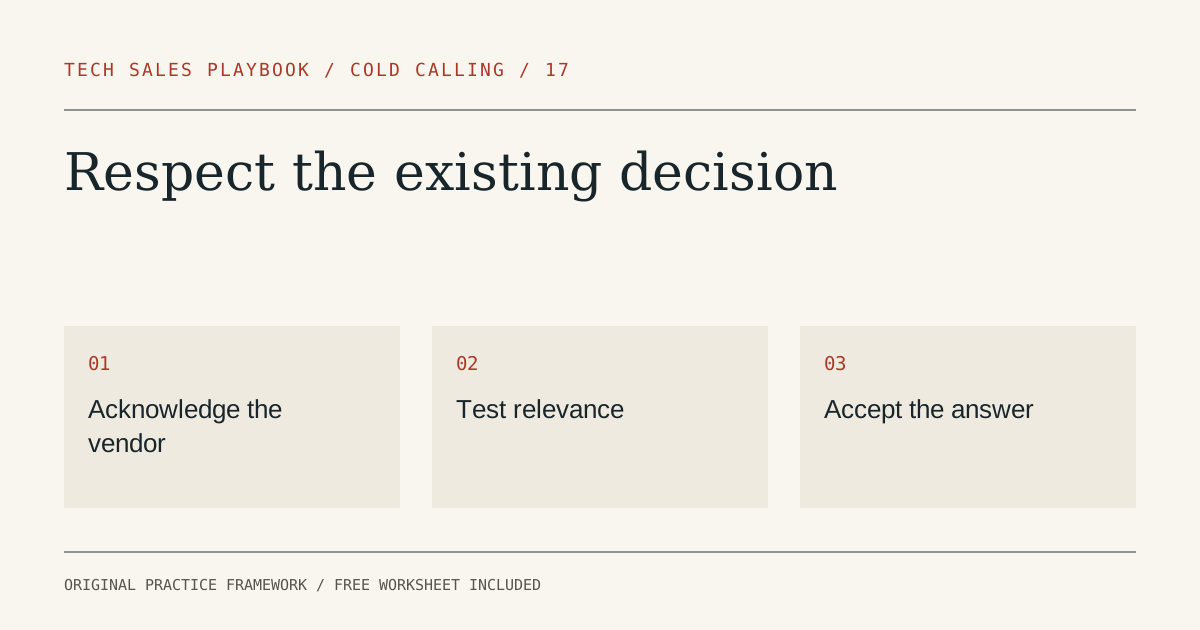
“We Already Have Security Tools”
Do not attack the incumbent. Clarify whether “covered” means the capability exists, the team is satisfied, or replacement is simply not timely.
“That makes sense. Is the current stack meeting the outcome you care about, or is changing it just not a priority this year?”
If the buyer is satisfied, exit professionally. If they name an operational constraint, ask one question about impact and ownership before proposing a next step.
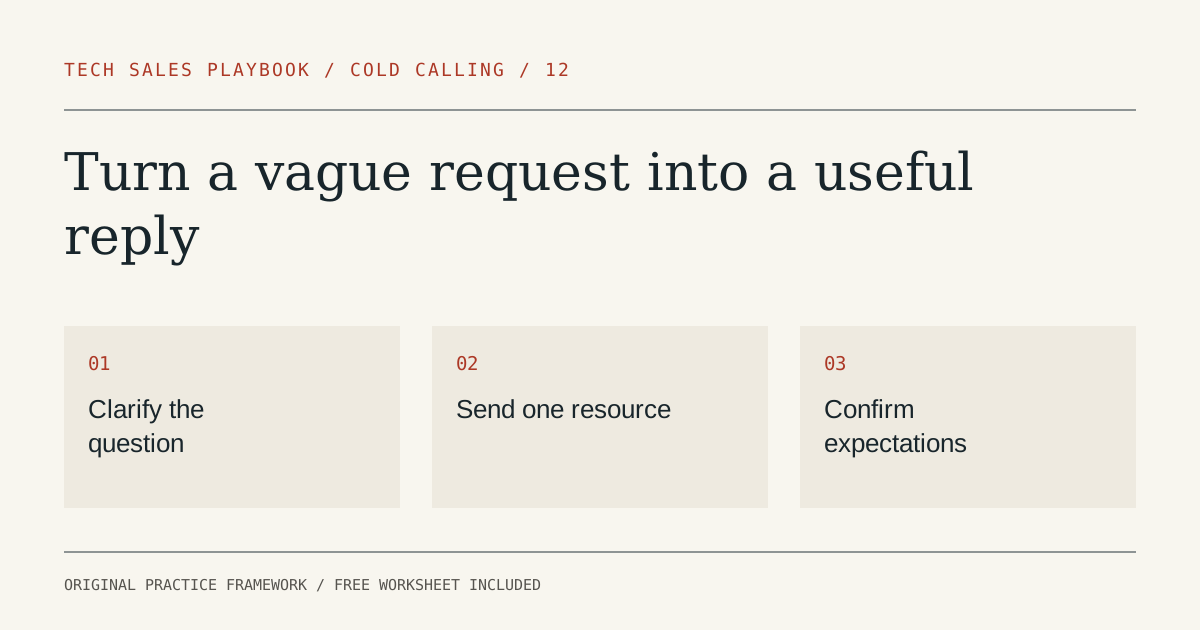
“Send Me Information”
Earn the right to send something specific:
“Happy to. So I do not send a generic deck, which is more relevant: visibility across the environment, reducing investigation work, or proving controls to another team?”
Confirm the destination and a modest follow-up. Never send sensitive attachments or request environment details by email.
“We Cannot Discuss Our Security Program”
Agree immediately. Shift to public, non-sensitive process questions:
“Understood—I am not asking for architecture or incident details. Would it be reasonable to discuss how teams evaluate this category and who normally participates?”
The NIST guidance for small businesses can help you understand risk language, but it is not a license to make compliance claims.
“This Is Not a Priority”
Clarify timing without inventing urgency:
“Got it. Is that because the current outcome is acceptable, another initiative owns the budget, or the category is outside this year's plan?”
Record the answer accurately. A real “not this year” is useful qualification.
Practice Scorecard
Score each response from 0–2 on listening, accurate restatement, one clarifying question, absence of fear tactics, and appropriate next step. Ten points is a composed conversation; five points usually means the rep is rebutting before understanding.
Use the cold-call scorecard to review recordings and the SaaS mock cold-call guide to rehearse under interview pressure. Compare this approach with the healthcare SaaS objections guide when the buyer also manages patient-data obligations.
Practice Across Sensitive Workflows
Compare security-review judgment with HR-tech objections, then practice operational disruption and integration concerns with logistics SaaS objections.
Put this guide to work
The Cold Calling + Mock Call Playbook
A complete cold-call and mock-call system for SDR candidates, BDRs, and reps who need booked meetings.
$29 USD · One-time purchase · Downloadable PDF
Preview this playbookRead the sample and see what is included before you buy.
Need the broader set? Compare The Prospecting Bundle for $39. Includes this book.